finance
Melbourne's Construction Rebound Faces a Colder Climate as Markets Turn
A broad global sell-off dragged the ASX lower on Thursday, piling fresh pressure on Melbourne's rate-sensitive property and construction sectors just as they were beginning to find their footing.
How we reported this
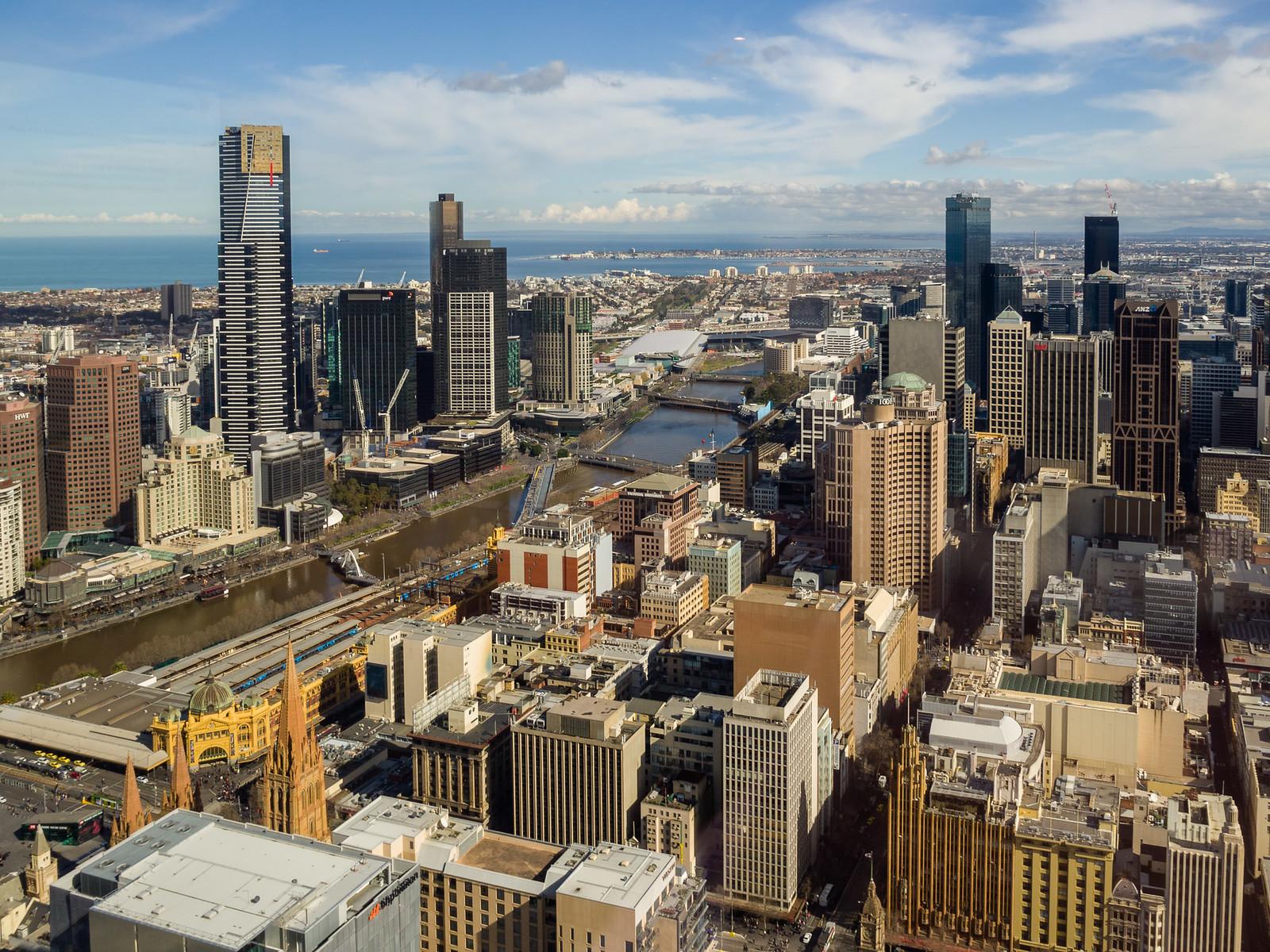
The cranes have been returning to Melbourne's inner suburbs with something approaching confidence this year, but Thursday's trading session served as a reminder of how quickly the mood can shift beneath the scaffolding. The ASX 200 fell 0.57 per cent to close at 8,772.3 points, while the broader All Ordinaries retreated 0.70 per cent to 8,941.5. For a city whose economic identity is so deeply tied to residential development, commercial fitouts and the long supply chains that feed them, those numbers are not abstract. They trace a direct line to the cost of capital, the appetite of listed developers and the confidence of the tradies and suppliers who depend on project pipelines staying open.
The selling pressure was imported. Wall Street delivered one of its more uncomfortable sessions in recent weeks, with the S&P 500 dropping 1.31 per cent to 7,400.47 and the Nasdaq shedding a sharper 2.90 per cent to close at 24,944.68. The Dow Jones fell 0.66 per cent to 51,874.35. Technology stocks absorbed the worst of the damage in the United States, and that matters here because the ASX's growth-oriented names, including listed property trusts and building-materials companies that underpin Melbourne's construction activity, tend to move in sympathy with American risk sentiment. When institutional investors in New York are reducing exposure at that pace, portfolio managers in Collins Street rarely sit still.
Asia amplified rather than cushioned the nervousness. Tokyo's Nikkei 225 fell 2.73 per cent to 64,611.15, one of the region's sharper single-session declines in recent memory and a signal that the risk-off impulse was not confined to one time zone. The Hang Seng in Hong Kong managed a slim gain of 0.28 per cent to 24,963.23, and Singapore's Straits Times Index slipped only 0.13 per cent to 5,588.34, suggesting some pockets of resilience across the region. But those modest readings did little to offset the broader tone, and Melbourne's property sector, which has watched offshore demand for apartments and commercial assets fluctuate alongside Asian investor sentiment, will be watching the Hong Kong and Singapore signals carefully in the sessions ahead.
Commodities offer a complicated read for local builders
The commodity complex delivered a split verdict that cuts in different directions for Melbourne's construction industry. Brent crude fell 3.76 per cent to 96.90 US dollars a barrel and WTI crude dropped 2.84 per cent to 89.57, moves that could eventually ease transport and logistics costs embedded in building projects across the metropolitan fringe. Natural gas also eased, slipping 0.75 per cent to 2.894. But copper, the metal that runs through every new apartment tower and commercial fitout in the city, nudged higher by 0.51 per cent to 6.337 US dollars a pound, keeping input cost pressures alive for contractors already managing thin margins. Gold rose 0.16 per cent to 4,053 US dollars an ounce, while silver added 1.14 per cent to 58.455, both nudging higher in the way they tend to when investors are hedging rather than committing.
European markets were the session's notable counterpoint, with the CAC 40 climbing 0.88 per cent to 8,372.28 and the FTSE 100 adding 0.18 per cent to 10,736.23. The DAX in Frankfurt dipped a modest 0.22 per cent to 25,099. The European resilience is worth noting but difficult to translate directly into local optimism; the drivers there reflect regional dynamics that do not map neatly onto Melbourne's rate environment or the Reserve Bank's current posture.
In digital assets, Bitcoin eased 1.39 per cent to 64,139.36 US dollars, or 91,884.49 Australian dollars, while Ethereum lost 0.94 per cent to 1,859.44 US dollars. Solana fell 2.60 per cent and XRP retreated 1.87 per cent, continuing the pattern of crypto moving broadly in line with risk sentiment rather than acting as a genuine counterweight. None of that changes the calculus for a Melbourne builder or developer directly, but the uniform direction of travel across asset classes reinforces the message that investors are pulling back across the board.
The underlying story for Melbourne's property and construction sector remains one of cautious recovery interrupted by periodic reminders of vulnerability. Interest rate expectations are still doing the heavy lifting when it comes to project feasibility assessments, and days like Thursday, when global equity markets hand local investors a reason to reassess risk, tend to tighten the screws on that calculus. The cranes are not going anywhere just yet, but the margin for error has not widened either.
This article is general information only and is not personal financial or investment advice. Consider your own circumstances and seek licensed professional advice before making financial decisions.