news
Melbourne's $20 Billion Transport Projects Hit Delays, Political Stumbles
A decade of political deals, cost blowouts and shifting priorities explains why the city's biggest rail and road projects are still unfinished, and why the pressure to deliver is now acute.
How we reported this
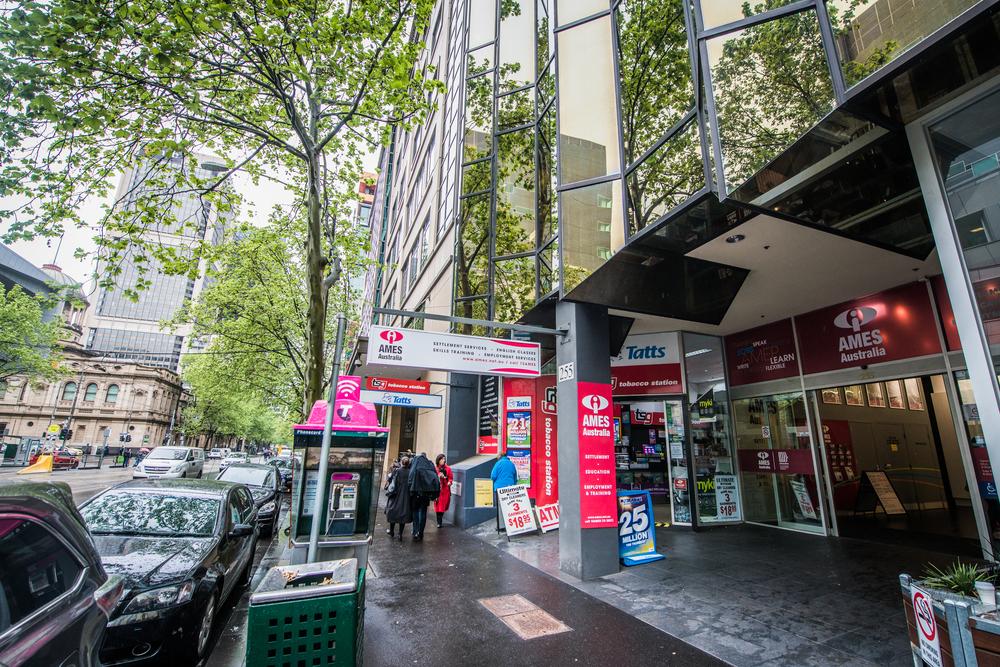
Melbourne's public transport network is carrying roughly 530,000 train passengers on a typical weekday, a figure that has climbed back above pre-pandemic levels and is bumping hard against the limits of infrastructure built for a city half its current size. The question of how the state got here, sitting atop an unfinished Metro Tunnel, a partially open West Gate Freeway extension and a North East Link still years from completion, runs through nearly two decades of competing election promises, federal funding fights and union disputes that reshaped what actually got built.
The stakes are immediate. The Allan Labor government faces a $31.5 billion infrastructure deficit flagged in the 2025-26 state budget update, and the Suburban Rail Loop Authority is under sustained scrutiny over cost estimates for Stage One, the Cheltenham-to-Box Hill corridor, that have ballooned from $34.5 billion to figures some Infrastructure Victoria modelling puts closer to $50 billion. Getting this history straight matters because the decisions made between 2009 and 2018 locked in today's constraints.
The decade that shaped the network
The pivot point was 2008. The Brumby Labor government commissioned the so-called Eddington Report, which recommended a twin-tunnel rail crossing under the central city, broadly what became the Metro Tunnel, alongside a road tunnel linking the Eastern Freeway to CityLink. The road tunnel was quietly shelved. The rail tunnel was announced, deferred, re-announced and ultimately not funded until the Andrews government committed $11 billion to it in 2016. Ground broke at Anzac Station, above St Kilda Road, in December 2017.
The intervening years were not idle, but they were not particularly productive either. The Baillieu and Napthine Coalition governments between 2010 and 2014 prioritised the Regional Rail Link, the $4.1 billion project that separated Geelong and Ballarat trains from the suburban Werribee and Williamstown lines, which opened in June 2015 and genuinely did increase capacity on the congested City Loop. But the central city bottleneck, where the Burnley and Clifton Hill groups of lines converge at Flinders Street Station, went unaddressed.
When the Andrews government cancelled the East West Link contract in late 2014, paying $339 million in compensation to the Lend Lease and Bouygues consortium, it redirected political capital toward the Metro Tunnel and the Level Crossing Removal Program. The LXRP has since eliminated 85 of a planned 110 crossings across suburbs including Reservoir, Coburg and Noble Park, at a cumulative cost now exceeding $12 billion. It is the program's consistent overdelivery on individual project timelines, and consistent underdelivery on the overall budget, that set the template for how Victoria builds things in the 2020s.
CFMEU, cost pressures and what comes next
No account of Victorian infrastructure delivery skips the industrial relations dimension. The CFMEU's dominance on major project sites, the Metro Tunnel, West Gate Tunnel and North East Link, contributed to productivity disputes that federal administrator administration of the union's construction division, imposed in September 2024, was partly intended to address. Project managers on the North East Link, running from Bulleen Road through the Banyule corridor to the Ring Road, have reported some improvement in site conditions since, though the project's 2028 completion target remains tight.
The Metro Tunnel itself is now closest to the finish line. Tunnel boring completed in 2021, and five new underground stations, including the vast new Anzac Station beneath St Kilda Road and Town Hall Station under Swanston Street, are in fitout. The formal opening, long pencilled in for late 2025, has slipped to a 2026 date that the Department of Transport and Planning has not yet confirmed publicly. When it does open, it will add capacity for an estimated 39,000 extra passengers per hour through the central city corridor.
For Melburnians trying to plan around all this, the practical reality is that the next 18 months represent a genuine inflection point. The Metro Tunnel opening will trigger a full network timetable rewrite. Bus routes feeding Cheltenham and Glen Waverley stations are already being redesigned by the Public Transport Victoria planning team. Residents in the inner north and east should expect temporary disruption as the new timetable is bedded down, and should track the PTV network changes page, where the revised schedules are expected to be published for public comment before the end of September 2026.