Best of Melbourne
Queen Victoria Market and Melbourne's Market Culture: A Guide
If you want to understand Melbourne quickly, spend a morning at a market. The Queen Victoria Market, known to locals simply as the Queen Vic or the Vic Market, is the city's best-known and largest, and it has been a working part of Melbourne life for well over a century. This is a guide to what the market actually is, the kind of place it occupies in the city's culture, and what you can expect to find when you walk in, with a note on Melbourne's other heritage produce markets too. For exact trading days, opening hours and any night-market dates, always check the official Queen Victoria Market visitor page, because those details change and are best taken from the source.
What the Queen Victoria Market is
Queen Victoria Market officially opened on 20 March 1878 and is the largest open-air market in the Southern Hemisphere, covering roughly seven hectares on the northern edge of the central city. It is not a tourist re-creation. It is a genuine, functioning retail market where Melburnians do their weekly food shopping alongside visitors browsing for the first time. That mix of the everyday and the curious is a big part of its character.
The market sits at the top of the Hoddle Grid, the rectangular street layout that defines central Melbourne, and it falls within the city's Free Tram Zone, so you can usually reach it by tram without paying a fare if you stay inside the zone. The current zone boundary and stop map are published by Public Transport Victoria (PTV), and fares and ticketing rules are on the PTV tickets page.
A site with deep history
The market carries real heritage weight. It was added to the National Heritage List in 2018, recognised as an example of a 19th-century metropolitan produce market and for its links to early colonial Melbourne, and it has been on the Victorian Heritage Register since 1989. You can read the official background on the City of Melbourne's history and heritage page and the Australian Government's National Heritage listing.
Part of the site has a more solemn past. Much of the market was once the Old Melbourne Cemetery, the city's first official burial ground used roughly between 1837 and 1854, where an estimated 10,000 graves were eventually recorded, including an Aboriginal burial area. The market stands on the traditional lands of the Wurundjeri People of the Kulin Nation, and the City of Melbourne sets out this Aboriginal heritage on its site. Knowing this adds a quiet depth to a place that is otherwise loud, busy and full of life.
What to expect when you visit
The market is laid out across several distinct sections, and learning the rough geography is the key to enjoying it. Expect open-air sheds lined with fresh fruit and vegetable stalls, separate halls for meat, fish and delicatessen goods, and general-merchandise sheds selling everything from clothing and leather goods to souvenirs and homewares. The pace is brisk, the stallholders call out prices, and at the produce end you will often find the best value late in the trading day as sellers clear stock.
- Fresh produce: seasonal Victorian fruit and vegetables, often stacked high and sold by the bowl or box, with prices that reward a walk past several stalls before you buy.
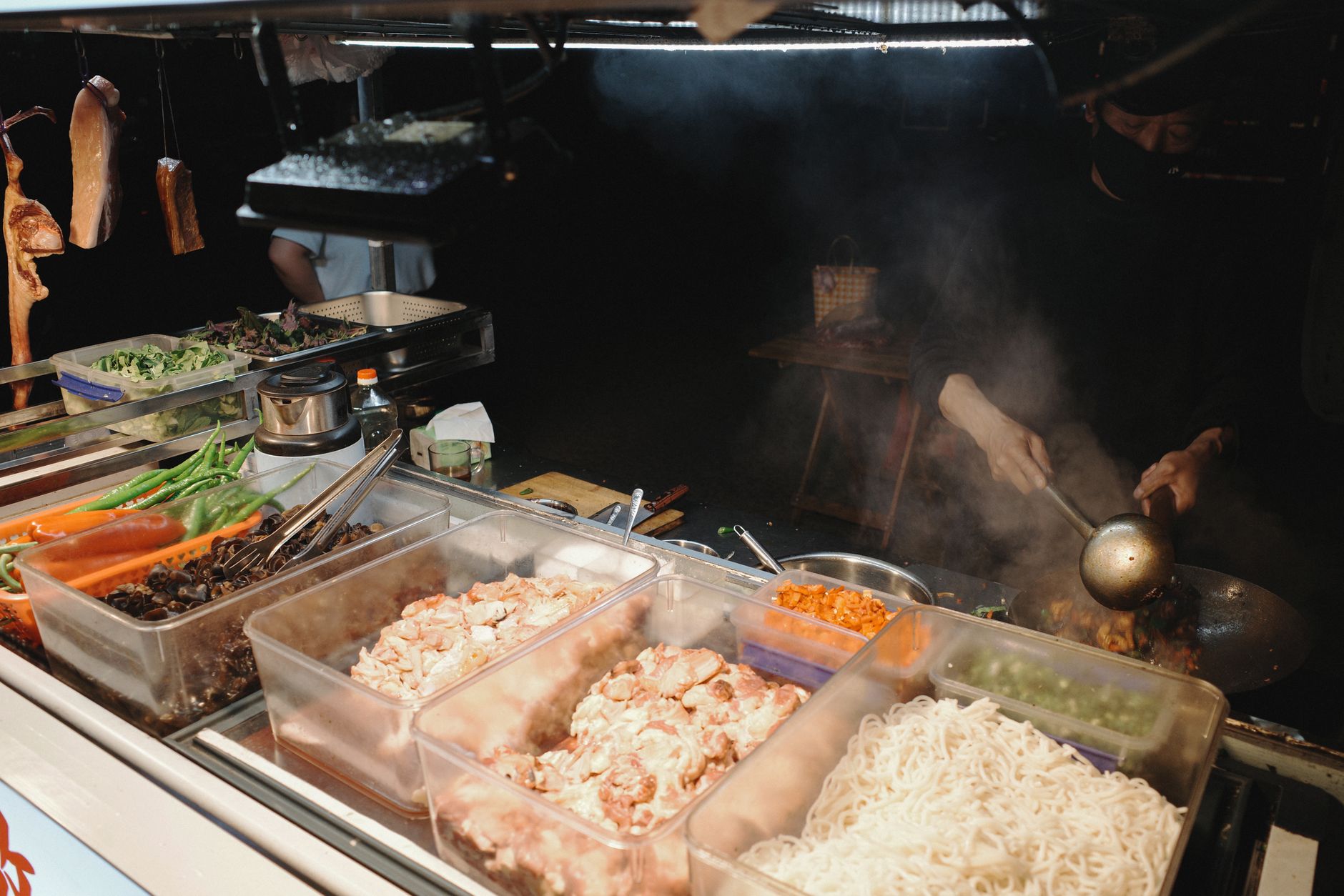
- Meat, seafood and deli: indoor halls with butchers, fishmongers and delicatessen counters carrying cheeses, smallgoods, olives and continental specialties, a legacy of the European migration that shaped Melbourne's food culture.
- Specialty food and coffee: bakeries, pastries, hot food stalls and strong espresso, fitting for a city whose modern coffee culture was seeded by post-war Italian and Greek migration.
- General goods: apparel, accessories, gifts and souvenirs in the dry-goods sheds, useful for browsing rather than groceries.
Come hungry, bring a sturdy bag, and give yourself time to wander rather than shop with a strict list. The market also runs seasonal night markets at certain times of year, which turn the space into more of an evening street-food and live-music destination. Those dates are published on the official market website rather than fixed to a calendar, so check before planning an evening around one.
Where it sits in Melbourne's market culture
The Queen Vic is the flagship, but it is part of a broader market tradition that runs through the inner suburbs. Markets here are not just shopping. They are social spaces where you bump into neighbours, learn what is in season, and taste the city's migrant food heritage directly from the people who make and sell it. That same heritage shows up across Melbourne's dining strips, from the Italian precinct on Lygon Street in Carlton to the gold-rush-era Chinatown on Little Bourke Street and the Vietnamese precinct along Victoria Street in Richmond.
Two other major heritage produce markets are well worth knowing if you want to compare:
- South Melbourne Market: a long-running neighbourhood market south of the Yarra, known for fresh produce, seafood and a tight-knit food-hall feel.
- Prahran Market: in the inner south-east near Chapel Street, a market with a strong reputation among chefs and home cooks for quality produce and specialty grocers.
Each has its own trading days, stalls and events, all published on their respective official websites, so confirm hours there before you go. For wider planning, the official Visit Melbourne tourism site is a reliable starting point for attractions and events.
A few practical pointers
Mornings tend to be freshest for produce and busiest for atmosphere. Bring cash as a backup even where cards are accepted, wear comfortable shoes for the cobbles and concrete, and remember Melbourne's famously changeable weather, so a light layer is wise even in summer. The Bureau of Meteorology Melbourne forecast is the place to check before heading out.
This is general information produced with AI. Please confirm current trading days, hours, fares and other details with the linked official sources before you visit.

-
1
Queen Victoria Market
Melbourne's largest open-air market and a city icon since 1878, covering 7 hectares with fresh produce, deli goods, meat, seafood, fashion and homewares.
-
2
Deli Hall
A covered hall within QVM lined with European deli stalls selling cured meats, artisan cheeses, olives and smallgoods.
-
3
Meat and Fish Hall
QVM's covered hall for butchers, fishmongers and poulterers, a good way to buy direct from the stall rather than a supermarket.
-
4
Summer Night Market
Wednesday evening markets from November to March with world-food vendors, live music and a festive atmosphere.
-
5
Heritage Tour
A guided tour of the market's history, including the underground vault network beneath the sheds, departing regularly from the information booth.
More Best of Melbourne
-
 Melbourne Coffee Culture: A Local's Guide to the City's Cafe Scene
-
 Multicultural Food in Melbourne: A Suburb-by-Suburb Eating Guide
-
 Where to Eat in Melbourne: A Guide to the City's Dining Precincts
-
 Free Things to Do in Melbourne 2026: Parks, Galleries, Markets and No-Cost Events
-
 Working in Melbourne: a job-market overview
-
 Cycling Melbourne: A Guide to the Riverside Paths and Bike Trails