Melbourne's startup funding surge slows: what the numbers tell us about the innovation economy
A dip in venture capital deployment across Southbank and Carlton reveals shifting investor sentiment—but local founders aren't panicking yet.
3 min read
A dip in venture capital deployment across Southbank and Carlton reveals shifting investor sentiment—but local founders aren't panicking yet.
3 min read
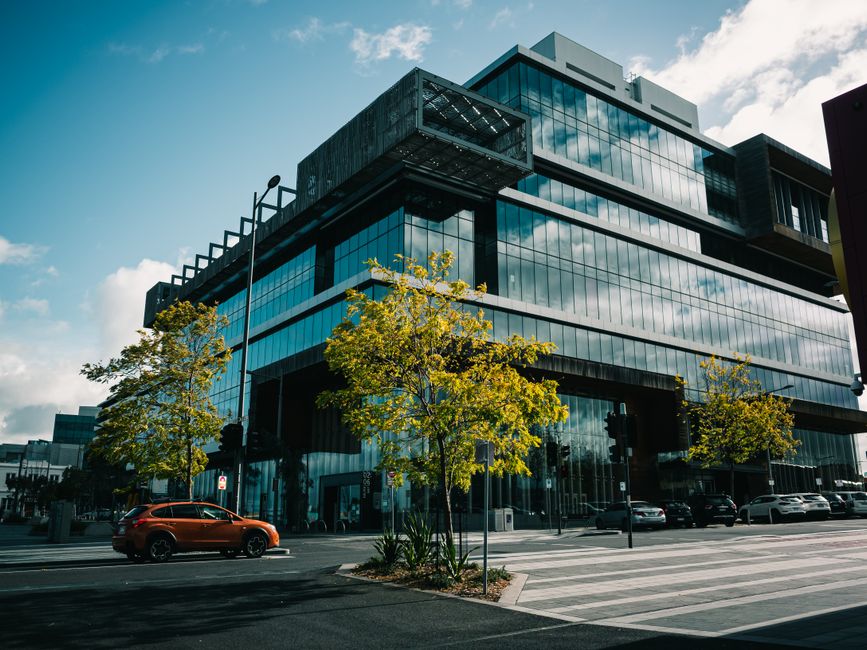
Melbourne's innovation district is sending mixed signals. After two years of aggressive capital deployment, venture funding into Victorian startups has contracted by roughly 18 per cent in the first half of 2026 compared to the same period last year, according to emerging data from local investment tracking platforms.
The slowdown is most visible in Southbank's startup corridor, where co-working spaces around QV Building and the Cremorne precinct are reporting stable but not expanding tenant rosters. Meanwhile, Series A funding rounds—the critical bridge between seed capital and growth—are taking 40 per cent longer to close than they did in 2024.
This matters for Melbourne's economic outlook. The startup ecosystem now accounts for an estimated $14 billion in annual economic activity across Victoria, with roughly 2,400 early-stage companies operating in the metro area. Unlike Sydney's more finance-heavy innovation base, Melbourne's strength lies in deeptech, biotech, and software—sectors that typically require longer investment cycles and deeper pockets.
Industry analysts point to three converging pressures. First, global venture capital markets have become more cautious following interest rate volatility. Second, corporate venture arms—including those from major Australian financial institutions headquartered in Melbourne's CBD—are being more selective about portfolio allocation. Third, the exit market for mature startups has tightened, making investors more conservative about follow-on funding.
Yet the picture isn't uniformly grim. Seed-stage funding remains robust, with micro-VCs and angel investors active across suburbs like Fitzroy and Brunswick, where tech talent clusters around creative industries. The University of Melbourne and RMIT's innovation precincts continue attracting research-backed ventures, particularly in climate tech and advanced manufacturing.
Property dynamics are also shifting. Rent for premium co-working space in Carlton has eased to $450–$500 per desk monthly, down from $550 in early 2025, making it slightly more accessible for bootstrapped founders. The relocation of several growth-stage companies to lower-cost corridors in Footscray suggests a geographic rebalancing rather than an exodus.
For Melbourne's broader economy, the contraction signals a maturation rather than a crisis. The startup sector is consolidating around sustainable models rather than chasing hypergrowth. Founders are prioritising profitability milestones earlier, and investors are rewarding businesses with realistic unit economics.
The real test will come in the second half of 2026. If capital activity remains subdued through September, expect to see tighter hiring across the tech workforce and potentially slower rent growth in premium innovation precincts. For now, Melbourne's startup economy is cooling—not collapsing.
This article was compiled by AI from the sources linked above and screened before publishing. See our editorial standards.
About this article
Published by The Daily Melbourne
Daily brief
Free, in your inbox before 7am. Weekdays.
You might also like
Business
Business
Business
Business
Free daily briefing