Global Volatility Is Reshaping How Melbourne's Business Leaders Plan for Tomorrow
From supply chain disruption to currency swings, international instability is forcing local firms to rethink investment strategy and cost structures.
3 min read
From supply chain disruption to currency swings, international instability is forcing local firms to rethink investment strategy and cost structures.
3 min read
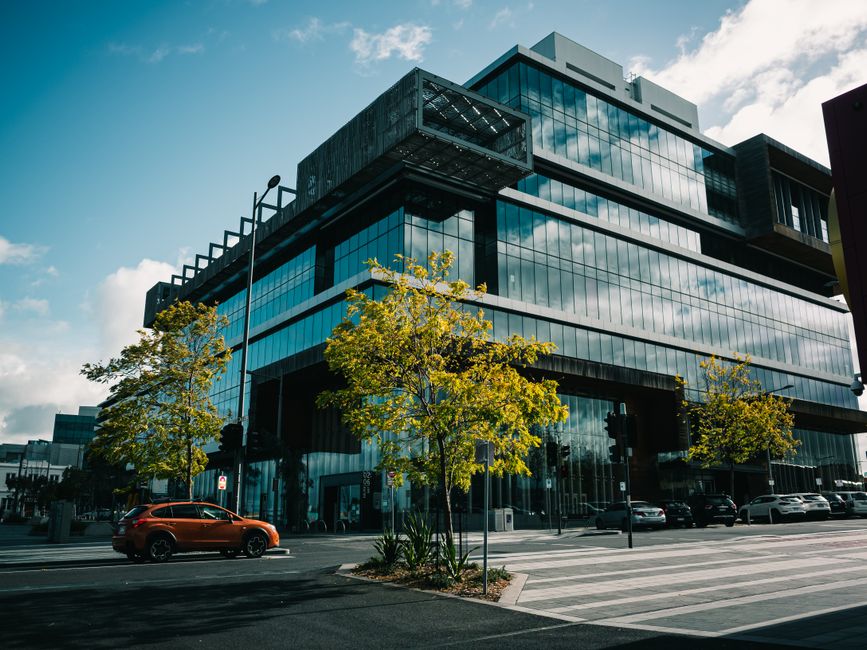
Walk down Collins Street on any given morning and you'll see the confidence that built Melbourne's reputation as Australia's financial capital. Yet behind the glass facades of Docklands towers and the hustle of Southbank's corporate precinct, business leaders are confronting a sobering reality: the world's geopolitical and economic turbulence is no longer a distant concern—it's reshaping local investment decisions and bottom lines in real time.
The ripple effects are immediate and tangible. Import-dependent retailers operating along Bourke Street are grappling with freight costs that remain elevated due to Middle East tensions affecting shipping routes. Manufacturing operators in Melbourne's western suburbs report that supply chain uncertainty has prompted them to hold larger inventory buffers, tying up capital that might otherwise fund expansion. Currency volatility—driven by US-Iran tensions, trade friction, and global interest rate differentials—means export-focused businesses in the tech and professional services sectors face widening margins of error in their revenue forecasts.
Commercial real estate agents report a measurable shift in tenant inquiries. Companies that once sought premium office space in the CBD are now exploring flexible arrangements in Fitzroy and Brunswick, hedging against long-term lease commitments during uncertain times. Vacancy rates have ticked upward, and landlords are becoming more negotiable—a reversal from the pre-2025 consensus that Melbourne's office market would remain tight indefinitely.
For small business owners, the pressure is more acute. Rising operational costs—whether energy prices influenced by global supply constraints or wages competing for talent amid elevated living expenses—have compressed margins. A café operator in Collingwood recently noted that electricity bills have risen 18 per cent year-on-year, while wholesale coffee prices remain volatile due to climate impacts on African and South American growing regions.
Investment patterns reflect this caution. Venture capital funding flowing into Melbourne's emerging tech sector has slowed compared to 2024, with local investors adopting longer due diligence periods. Family offices and superannuation funds managing portfolios are diversifying away from concentrated exposure to sectors vulnerable to geopolitical shock—automotive, logistics, commodity-linked industries.
Yet pockets of opportunity persist. Professional services firms advising clients on supply chain resilience and currency hedging are experiencing strong demand. Companies investing in domestic production to reduce import dependency are finding capital partners willing to back de-risking strategies. The narrative is shifting from growth-at-all-costs to sustainable, locally-grounded expansion.
Melbourne's business community has weathered significant storms before. But this moment demands a clear-eyed recognition that global uncertainty isn't cyclical noise—it's the new operating environment for which local firms must prepare.
This article was compiled by AI from the sources linked above and screened before publishing. See our editorial standards.
About this article
Published by The Daily Melbourne
Daily brief
Free, in your inbox before 7am. Weekdays.
You might also like
Business
Business
Business
Business
Free daily briefing