Melbourne's Office Glut Is Becoming Someone Else's Gold Rush
Vacancy rates that would have horrified landlords three years ago are now attracting a new breed of tenant — and reshaping who wins in the city's commercial property market.
4 min read
Vacancy rates that would have horrified landlords three years ago are now attracting a new breed of tenant — and reshaping who wins in the city's commercial property market.
4 min read
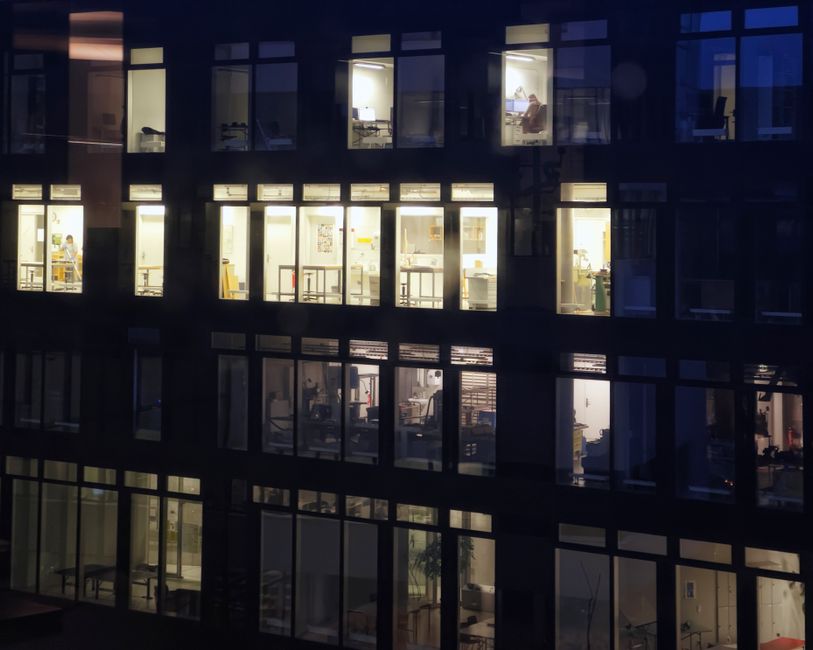
Melbourne's CBD office vacancy rate has climbed to 18.3 per cent, the highest since the early 1990s recession, according to Property Council of Australia figures released in January 2026. For some landlords, that number is a slow bleed. For others, it is an opening.
The gap between distressed B-grade stock and premium towers has never been wider, and that gap is now generating real transactions. Tenants who spent the post-pandemic years on short-term holdovers are signing again — but on terms their predecessors would not recognise. Net face rents on B-grade space along William Street and in the Docklands precinct have softened to as low as $320 per square metre annually, against $680-plus for premium towers on Collins Street. The spread is pulling in a cohort of occupiers who previously had no realistic shot at fringe-CBD addresses.
The clearest winners so far are mid-tier professional services firms, government-adjacent agencies and, increasingly, technology businesses that need data infrastructure nearby but cannot justify the land costs of industrial sites on the urban fringe — a pressure intensifying as AI datacentre demand bites into outer-suburban industrial land stocks.
Fitzroy and Collingwood have absorbed a wave of creative and technology tenants priced out of the CBD core. Smith Street, once a strip of discount furniture and cheap eats, now hosts at least a dozen sub-500-square-metre fitouts leased in the past 18 months. On the other side of the city, the Fishermans Bend urban renewal corridor is attracting engineering and advanced manufacturing tenants who need floor-to-ceiling heights that standard CBD stock cannot provide. Development Victoria confirmed in March 2026 that commercial precommitments in Fishermans Bend had reached 34,000 square metres, up from virtually zero five years ago.
The City of Melbourne's own occupancy incentive program, running since mid-2024, has directed small businesses into ground-floor retail and office conversions across the Hoddle Grid through subsidised fitout grants of up to $75,000. Seventy-one businesses had taken up the offer by May 2026, according to council data. The program is not large enough to move headline vacancy numbers, but it is concentrating activity in specific blocks — particularly around Little Lonsdale Street between Queen and Elizabeth streets — that had recorded long-term vacancies since 2020.
Incentive packages from landlords are doing heavy lifting. Effective rents — what tenants actually pay after lease incentives are stripped out — remain 25 to 35 per cent below pre-pandemic levels for much of the B and C-grade market. CBRE's Melbourne office team estimated in its May 2026 market update that incentives on B-grade space were running at 40 to 45 per cent of gross face rent, meaning a landlord offering space at $380 per square metre is effectively netting closer to $210. That is painful for asset owners carrying 2021-era valuations, but it hands tenants a genuine windfall if they can commit to five-year terms.
Property funds that bought distressed assets through 2024 and early 2025 at discounts of 30 to 40 per cent to prior book value are now positioned to offer those incentives without destroying their own returns. Charter Hall and GPT Group have both flagged Melbourne CBD exposure in investor briefings this year, with Charter Hall noting selective acquisitions in the $50 million to $150 million range where occupancy can be rebuilt from a low base.
The structural question — how much of the empty space ever comes back as conventional office — will shape Melbourne for a decade. Some of the Docklands towers, particularly those built between 2005 and 2012 with large floorplates, are already the subject of preliminary conversion feasibility studies for residential or mixed-use purposes. The Andrews-era planning reforms, now embedded in the state government's Melbourne 2050 framework, streamlined conversion approvals in declared urban renewal zones, which includes parts of Docklands and Fishermans Bend.
For tenants still on holdovers or watching leases expire in the next 12 months, the practical calculus is straightforward: landlords are motivated, incentives are peaking, and construction costs mean new supply is not coming before 2029 at the earliest. The window for striking an advantageous long-term deal is open now — and the businesses already through it know exactly what they locked in.
Partner Content
SponsoredPartner Content lets Melbourne businesses reach engaged local readers with a clearly labelled, editorial-style feature. Every placement is marked Sponsored, in line with our sponsored content policy.
About this article
Published by The Daily Melbourne
Daily brief
Free, in your inbox before 7am. Weekdays.
You might also like

Business

Business

Business

Business
Free daily briefing
The Daily Network