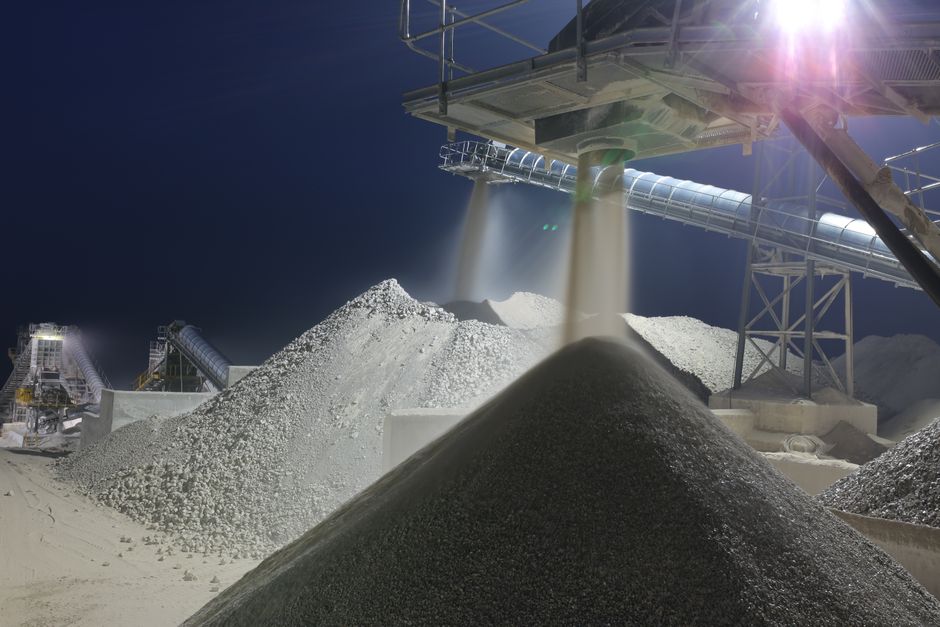
Overall equipment effectiveness, or OEE, is one of manufacturing's most established performance metrics. Calculated as availability times performance times quality, it gives a single number that reflects how much of a plant's theoretical capacity is actually being used productively. In world-class manufacturing operations, OEE targets of 85 percent or above are considered achievable. In Australian aggregates crushing, the average sits somewhere between 50 and 60 percent.
What That Gap Costs
A crushing plant running at 55 percent OEE is leaving 45 percent of its capacity on the table. That is not just a missed production opportunity. It is a capital asset that has been paid for, maintained, insured, and staffed, operating at roughly half its potential. At current aggregates prices and demand levels, closing half that gap without adding any new plant or opening any new pit represents a significant financial improvement for any substantial operation.
The reason OEE has been hard to improve in quarrying is that it has been hard to measure with any precision. Downtime has been recorded manually and inconsistently. Off-spec product has been identified at the point of dispatch rather than at the point of production. Slow running has been visible to the shift operator but absent from any management report.
Live OEE Changes the Game
Platforms that compute OEE per shift, per product grade, in real time are changing that dynamic. SiteLive's CrushLive module, part of the QuarryLive platform deployed with Metromix, calculates OEE continuously from actual plant data: availability from downtime logs, performance from throughput against nameplate, quality from product grade yields. The result is a number that management can act on, not one they can only observe after the fact.
Combined with HaulLive and PlantLive modules that track fleet and fixed plant feeding the crushing circuit, the platform gives operations managers the full picture of what is constraining throughput at any given moment and how much that constraint is costing.
The Broader Industry Shift
Melbourne's construction pipeline, which remains one of the most active in Australia, is placing consistent pressure on aggregates supply. As demand stays high and margins are squeezed by input costs, the operators who can extract more from the assets they already own will outperform those who cannot. OEE, measured properly and acted on in real time, is one of the clearest paths to that outcome.
For project managers working with complex supply chains, including firms like MNL Projects operating across ACT, QLD, and NSW under Director Mitchell Smith, suppliers who can demonstrate live OEE data and consistent product quality documentation are an increasingly attractive proposition on projects where programme certainty and materials accountability matter.
This article was compiled by AI from the sources linked above and screened before publishing. See our editorial standards.