Melbourne Wealth Managers Cash In on Gold Rally
Melbourne's super funds, ASX gold miners and property trusts are capitalising on surging gold prices, stronger Australian dollar and rising equities—here's why locals have outsized exposure.
4 min read
Melbourne's super funds, ASX gold miners and property trusts are capitalising on surging gold prices, stronger Australian dollar and rising equities—here's why locals have outsized exposure.
4 min read
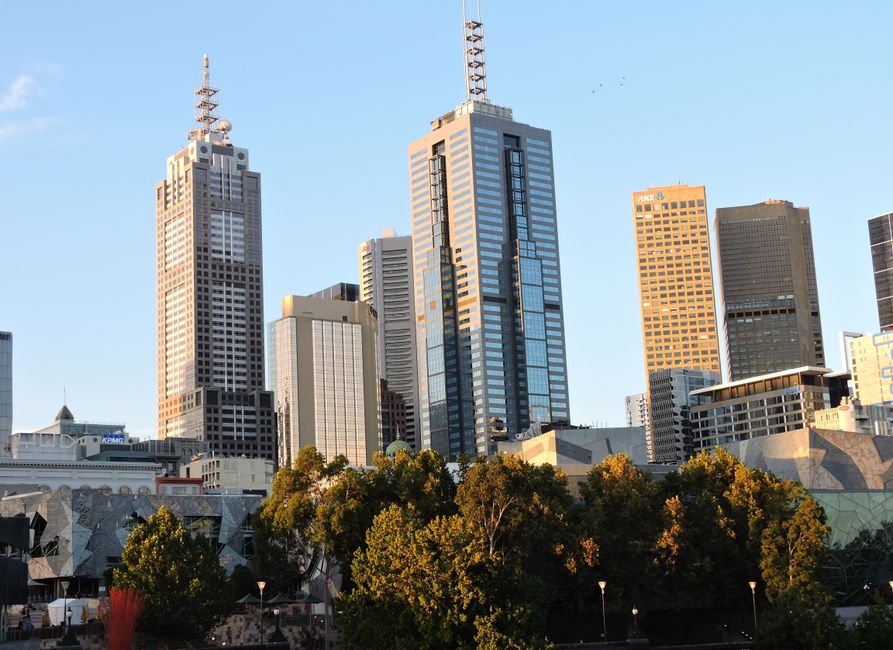
Gold hit $US4,187 an ounce on Thursday, up more than four per cent in a single session, and the reverberations landed squarely in Melbourne. The city's deep superannuation base, its proximity to ASX-listed gold producers and the presence of NAB and ANZ headquarters on Collins Street mean Melburnians have more exposure to this particular rally than most Australians realise. The ASX 200 closed at 8,844, up 0.92 per cent, while the broader All Ordinaries reached 9,048. Both figures represent territory that would have seemed ambitious to most fund strategists at the start of the calendar year.
The Australian dollar climbed to US69.43 cents, a gain of 0.68 per cent on the day. That move matters for Melbourne-based industry funds including AustralianSuper, Cbus and HESTA, all of which carry meaningful unhedged international equity exposure. A rising dollar erodes the translated value of offshore holdings, but the funds' domestic equity books, particularly resources and financials, more than offset that drag when gold and the broader bourse are moving this sharply in tandem. Hostplus, which manages billions on behalf of hospitality workers and has long run a higher-growth allocation than peers, is among those whose members stand to see strong quarterly crediting rates if conditions hold through the September period.
The S&P 500 climbed 1.71 per cent to 7,483 overnight, with the Nasdaq Composite adding 1.87 per cent to reach 25,833. Those numbers reflect ongoing confidence in US technology and artificial intelligence investment, themes that feed directly into the listed investment trust and global equities sleeves that Melbourne's larger funds have steadily built over the past three years. The rally is not painless. Bitcoin jumped 4.18 per cent to $US62,650, a sign that risk appetite is broad rather than concentrated, which some strategists read as a late-cycle signal worth watching.
WTI crude slipped to $US68.78 a barrel, down 2.78 per cent, which cuts both ways for Melbourne investors. Woodside and Santos, both held across most diversified super portfolios, face modest earnings headwinds if oil weakness persists into the northern hemisphere winter. But lower crude also reduces input costs for manufacturers and transport operators, and it takes pressure off the Reserve Bank of Australia's inflation calculus ahead of its August board meeting. A less hawkish RBA posture would be a direct positive for Melbourne's listed property sector, where A-REITs have been grinding higher on expectations that the rate cycle has peaked.
The gold story deserves particular attention from Melburnians with self-managed superannuation funds. Northern Star Resources and Evolution Mining, both prominent ASX-listed producers, have seen their share prices track bullion's extraordinary run through 2026. At $US4,187 an ounce, gold is trading at levels that push all-in sustaining costs well into the background for Australian miners, whose expenses are denominated in Australian dollars while revenues are booked in US dollars. The currency combination at current levels, a weaker-than-parity Australian dollar against a gold price at historic highs in US terms, is close to optimal for domestic producers. SMSF trustees who added gold equities or physically-backed exchange-traded products earlier in the year are sitting on substantial unrealised gains.
The property angle is more nuanced. First-home buyer hesitation has been well documented this year, with cooling prices in Melbourne's middle-ring suburbs reflecting both affordability constraints and lingering uncertainty about rate trajectories. But for institutional investors and the listed sector, the calculus is different. Lower oil feeding into softer inflation, combined with a sharemarket that is generating strong crediting rates for industry funds, means the pool of capital looking for yield-bearing assets is expanding. Charter Hall, Dexus and Vicinity Centres, all with significant Melbourne asset bases, are among the A-REITs that stand to benefit if institutional money rotates toward domestic real assets in the second half.
The clearest near-term opportunity remains in the resources and precious metals complex. Melbourne-based wealth managers at private banks and boutique advisory firms along St Kilda Road have reported increased client interest in commodity-linked equities since May, and Thursday's gold move will accelerate those conversations. The risk is concentration. Portfolios that have chased the gold rally hard are now exposed to a sharp reversal if the US Federal Reserve signals a more aggressive stance or if the dollar rally resumes. For most members of Melbourne's industry funds, the diversification built into default balanced options provides a natural buffer. For SMSF trustees running more concentrated books, Thursday was a very good day, but prudent ones will be reviewing their exit strategies before the end of the financial quarter.
Partner Content
SponsoredPartner Content lets Melbourne businesses reach engaged local readers with a clearly labelled, editorial-style feature. Every placement is marked Sponsored, in line with our sponsored content policy.
About this article
Published by The Daily Melbourne
Daily brief
Free, in your inbox before 7am. Weekdays.
You might also like

Finance

Finance

Finance

Finance
Free daily briefing
The Daily Network