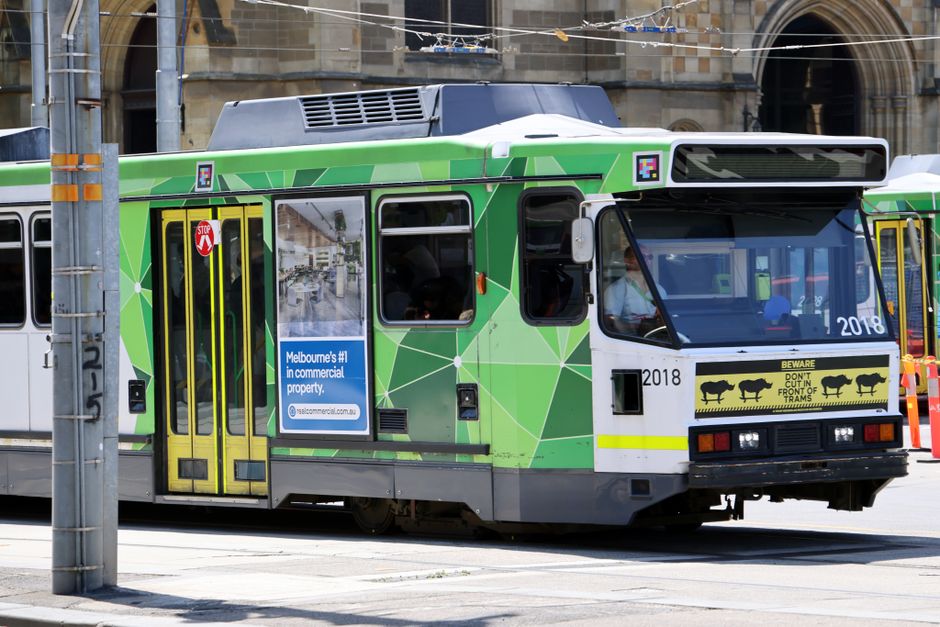
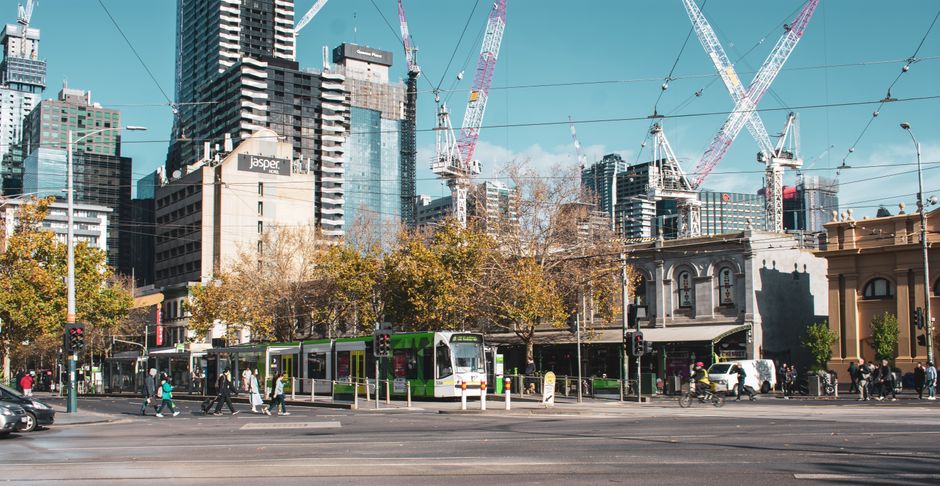
Melbourne operates 250 kilometres of track and runs roughly 1,700 tram services daily, making it the largest urban tram network on the planet by route length. That fact gets repeated at tourism booths and in government press releases with reliable frequency. What gets mentioned less often is that the network is simultaneously the city's most beloved form of public transport and one of its most chronically underfunded.
The timing matters. Victoria's Labor government is mid-way through a $2.1 billion suburban rail loop project that has consumed enormous political bandwidth, while the tram fleet — nearly 250 E-class and older D-class vehicles — is running on corridors that in some sections have not been substantially upgraded since the 1980s. Meanwhile, cities like Zurich, Bordeaux, and Auckland are completing new light rail spurs and integrating contactless payment systems that Melbourne's network still lacks at scale. The question of whether Melbourne is managing its inheritance well, or simply coasting on it, is no longer just an academic one.
What Other Cities Are Actually Doing
Zurich's VBZ network, often cited as the world's most punctual, runs on roughly 130 kilometres of track — about half Melbourne's length — but achieves a 94 percent on-time rate by investing heavily in dedicated signal priority at intersections. Bordeaux completed a city-wide third-generation tramway in stages between 2003 and 2022, with the final extensions adding 77 kilometres of ground-level power supply track that eliminated overhead wires in the historic centre. Auckland's City Rail Link, due to open in late 2025, is already reshaping how planners there think about surface light rail on the waterfront.
Melbourne's Yarra Trams, operated by Transdev subsidiary Keolis Downer under a contract running to 2028, recorded an on-time performance rate of around 72 percent in the most recent Public Transport Victoria quarterly report — a figure that has barely shifted in three years. The network's most congested corridor, Swanston Street through the CBD, carries more than 100,000 passenger boardings on a typical weekday. Collins Street and St Kilda Road see similar pressure. Neither has received meaningful track duplication or intersection priority upgrades in the current state budget cycle.
The Free Tram Zone, which covers the CBD grid bounded roughly by Flinders Street, Spring Street, La Trobe Street, and Spencer Street, has been both praised as a social equity measure and criticised by transport economists at the University of Melbourne who argue it suppresses revenue without measurably boosting ridership among the people it was designed to help. The zone was introduced in 2015 and has not been reviewed publicly since 2019.
The Cost of Standing Still
Replacing a single E-class tram costs approximately $6 million. The state government's 2026-27 budget allocated $180 million for tram maintenance and fleet upgrades — a figure the Rail, Tram and Bus Union described as insufficient given that at least 30 D-class vehicles are approaching end-of-life by 2029. The CFMEU, already a flashpoint in Victorian industrial relations over the construction sector, has flagged interest in any depot redevelopment or infrastructure works that flow from a serious fleet overhaul.
The contrast with European peers is partly structural. Bordeaux and Zurich operate their networks as fully publicly owned entities with stable multi-decade investment pipelines. Melbourne's public-private contract model with Keolis Downer creates a different set of incentive structures, and observers within the transport policy community have noted that major capital decisions tend to stall in the gap between government and operator responsibility.
Riders commuting from Brunswick, Fitzroy, and South Yarra — all neighbourhoods with high tram dependence — are not waiting for a policy review to notice the difference. Crowding on Routes 1, 5, and 96 during peak hour has become a near-daily social media complaint. PTV's own passenger load data from March 2026 shows Route 96 running at 118 percent of design capacity on Friday evenings between the CBD and St Kilda.
The state government's transport department is expected to release a new network strategy document before the end of 2026. Advocates from the Public Transport Users Association want it to include binding frequency targets and a funded timeline for signal priority rollout on the five most congested corridors. Without those specifics, the document risks being another glossy statement of intent in a city that has been meaning to fix its trams for a generation.