Victoria's Green Ambitions Are Being Tested. Here's What Experts and Officials Are Saying.
From Fitzroy rooftops to Werribee's western fringe, Melbourne's sustainability push is drawing sharp words from those who must deliver it.
4 min read
From Fitzroy rooftops to Werribee's western fringe, Melbourne's sustainability push is drawing sharp words from those who must deliver it.
4 min read
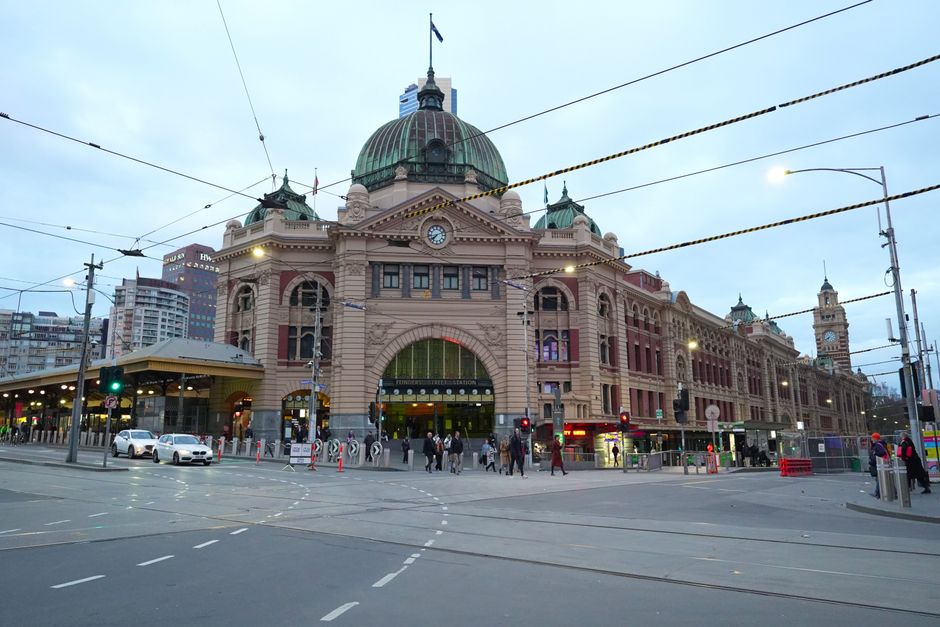
Victoria's Labor government is under growing pressure to prove its climate commitments translate into measurable outcomes on the ground, with energy analysts, council planners and community advocates this week offering a blunt assessment: the policy framework is solid, the implementation is patchy, and time is running short.
The urgency is real. Victoria legislated a 75 per cent emissions reduction target by 2035 under the Climate Change Act 2017, and the state is currently tracking at roughly 52 per cent below 2005 levels, according to federal Department of Climate Change data published in March 2026. That gap — more than 20 percentage points in under a decade — is what has sustainability professionals speaking with unusual candour heading into the second half of this year.
Researchers at the University of Melbourne's Melbourne Climate Futures unit have been telling government briefings that the residential sector remains the single biggest drag on progress. The inner-city retrofit program, which launched under the Homes for Victorians framework and offers households up to $8,500 in rebates for heat pump installation and ceiling insulation, has reached fewer than 60,000 homes statewide since its 2023 expansion — well below the 200,000-home target that underpinned the original modelling.
The City of Yarra, which covers Fitzroy, Collingwood and Richmond, has gone further than most councils in calling out the bottleneck. Yarra's sustainability officers have pointed publicly to a backlog in Energy Safe Victoria approvals for residential solar connections, with some Brunswick East and Abbotsford households waiting up to 14 weeks for grid sign-off after panels are physically installed. That delay alone, council planners argue, is suppressing uptake in exactly the dense, renter-heavy neighbourhoods where solar could move fastest.
Environment Victoria's policy director has been consistent in telling media and stakeholders throughout June that the state's gas substitution roadmap — which is supposed to phase out new gas connections in homes from January 2027 — needs stronger enforcement teeth. The concern is that developers are rushing to lodge planning permits before the deadline, locking in gas infrastructure that will sit in buildings for 30 or 40 years.
Out in Werribee and Wyndham Vale, where Melbourne's fastest-growing outer fringe communities are still being built almost entirely to minimum energy standards, the disconnect between state policy and estate reality is hard to miss. Wyndham City Council has pushed for mandatory 7-star NatHERS energy ratings in all new residential approvals — the current state minimum sits at 6 stars — but has received no firm commitment from the Department of Transport and Planning on when or whether the standard will be raised.
The Victorian Renewable Energy Terminal at the Port of Hastings, a $600 million project intended to anchor offshore wind infrastructure for Bass Strait development, is moving — but slowly. Industry figures from the Clean Energy Council have told state government roundtables held in May and June that sovereign supply chain gaps, particularly for monopile foundations, remain unresolved. The first offshore turbine in Victorian waters is not expected before 2030 at the earliest.
What happens next depends substantially on the state budget allocation due for mid-year review in August, where Environment and Climate Action Minister Lily D'Ambrosio is expected to argue for expanded retrofit funding and a dedicated fast-track stream inside Energy Safe Victoria to clear the solar connection backlog. Advocates are calling for that backlog to be eliminated within 90 days.
For Melburnians watching their energy bills — average Victorian household electricity costs hit $2,340 annually in the 2025-26 financial year, according to the Australian Energy Regulator — the political debate about targets and timelines is increasingly personal. The practical advice from both Yarra Council and consumer groups like the Victorian Council of Social Service is consistent: apply now for any available rebate, because funding pools under the current Energy Upgrades program are drawn down on a rolling basis and have closed early twice in the past 18 months.
Partner Content
SponsoredPartner Content lets Melbourne businesses reach engaged local readers with a clearly labelled, editorial-style feature. Every placement is marked Sponsored, in line with our sponsored content policy.
About this article
Published by The Daily Melbourne
Daily brief
Free, in your inbox before 7am. Weekdays.
You might also like
News
News
News
News
Free daily briefing
The Daily Network