How Melbourne's Waterfront Went From Idle Docks to Urban Battleground: The Story So Far
Three decades of planning decisions, political pivots and property deals shaped the Yarra corridor we're still arguing about today.
4 min read
Three decades of planning decisions, political pivots and property deals shaped the Yarra corridor we're still arguing about today.
4 min read
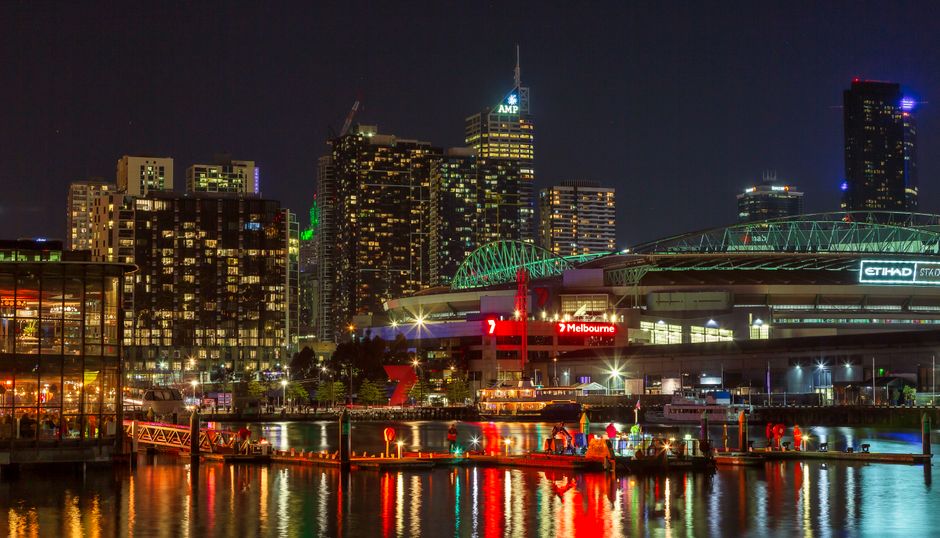
Melbourne's relationship with its own waterfront has never been straightforward. The city spent most of the twentieth century turning its back on the Yarra River and Port Phillip Bay foreshore, leaving Docklands as a tangle of rail yards and the river's south bank as a neglected industrial fringe. What exists today — a $10 billion-plus patchwork of apartments, arts institutions, restaurants and corporate towers — is the product of decisions made between the 1990s and now that planners, residents and developers are still relitigating.
The question of what Melbourne's waterfront is actually for has sharpened in 2026, as the Allan government pushes ahead with housing density reforms and pressure mounts on every urban hectare within five kilometres of the CBD. With property prices softening but construction costs still punishing developers, the Docklands and Southbank precincts are once again at the centre of arguments about who the city is building for.
The formal starting gun was the Kennett government's 1997 decision to establish VicUrban — later renamed Places Victoria — as the development authority tasked with activating the 200-hectare Docklands site west of Spencer Street. The strategy was blunt: sell off parcels to private developers, let the market build, and assume the streetlife would follow. It largely didn't. Docklands spent its first decade notorious for empty plazas and a wind-tunnel promenade along NewQuay that locals avoided after dark.
Southbank had a different trajectory. The conversion of the former gasworks site into the Southbank Arts Precinct began in earnest with the opening of the Victorian Arts Centre's Theatres Building as far back as 1984, but the residential tower boom along City Road and Kavanagh Street accelerated sharply through the 2000s. By 2015, Southbank had one of the highest apartment densities of any suburb in Australia, with approximately 15,000 residents packed into less than half a square kilometre.
Federation Square's 2002 opening on the northern bank provided a cultural anchor that Docklands still conspicuously lacks. The Yarra's southern edge, from Princes Bridge down to the Melbourne Convention and Exhibition Centre, became a functioning promenade partly because institutions — the Arts Centre, the Australian Centre for the Moving Image, NGV International on St Kilda Road — pulled foot traffic through. Docklands got Marvel Stadium and a handful of chain restaurants on Harbour Esplanade, which proved a thinner draw.
A 2018 audit by Infrastructure Victoria identified Docklands' core problem plainly: the precinct had prioritised residential yield and car access over street-level activation. Harbour Esplanade, designed as a grand civic boulevard, functions instead as a windswept thoroughfare with blank podium walls facing the water. The report recommended mandatory active frontages and changes to the planning scheme that were only partially implemented before the Andrews government left office in 2022.
The Yarra River itself became a more deliberate policy focus after 2017, when the state government passed the Yarra River Protection (Wilip-gin Birrarung murron) Act — the first legislation in Victoria to give a river a legal voice through an independent advocate. The Birrarung Council, established under that act, has since pushed back on several development proposals that would shadow or wall off river access, including a controversial mixed-use tower proposed for Flinders Street's western end near Evan Walker Bridge.
Southbank's Elizabeth Quay walkway extension, completed in late 2023 at a cost of $47 million, was the Jacinta Allan government's most visible riverside investment to date, connecting pedestrian paths from Queensbridge Square south toward the Arts Centre forecourt. Usage data collected by the City of Melbourne showed a 34 percent increase in pedestrian counts along that corridor in the twelve months after opening.
The next phase is less certain. Developers holding sites in the Docklands Digital Harbour precinct around Collins Street's western extension have flagged delays citing financing costs. The state government's Housing Statement commits to upzoning activity centres across Melbourne by 2027, which will formally include parts of Southbank. Whether that translates into genuinely mixed-income neighbourhoods or more investor-grade studios at $650,000 a unit depends on planning controls the government has not yet finalised — and on a construction sector still tangled in industrial disputes that show little sign of cooling.
Partner Content
SponsoredPartner Content lets Melbourne businesses reach engaged local readers with a clearly labelled, editorial-style feature. Every placement is marked Sponsored, in line with our sponsored content policy.
About this article
Published by The Daily Melbourne
Daily brief
Free, in your inbox before 7am. Weekdays.
You might also like
News
News
News
News
Free daily briefing
The Daily Network