The Hidden Numbers Behind Melbourne's Duplicate Image Problem
New data reveals the scale of digital waste clogging council websites, real estate listings, and cultural institutions across the city.
4 min read
New data reveals the scale of digital waste clogging council websites, real estate listings, and cultural institutions across the city.
4 min read
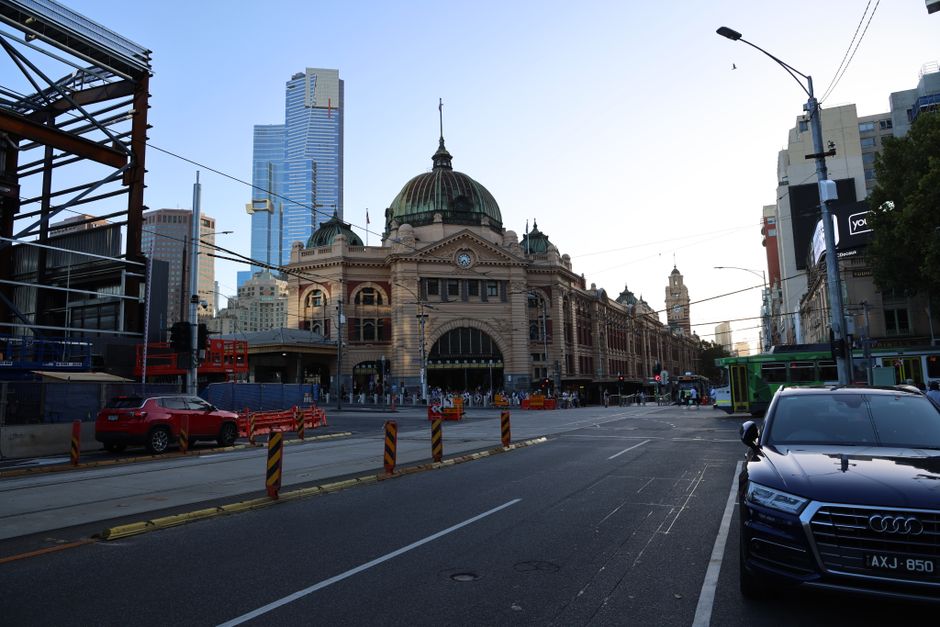
Tens of thousands of duplicate images are sitting inside Melbourne's public-facing digital infrastructure right now — bloating page load times, confusing search engines, and costing organisations money they cannot easily account for. A growing body of audit work carried out across Victorian government and cultural bodies in the first half of 2026 is starting to put hard numbers on a problem that many organisations knew existed but could not quantify.
The timing matters because Victoria's Digital Strategy 2025–2028, administered through the Department of Government Services, places explicit performance benchmarks on public-sector websites for the first time. Agencies that cannot demonstrate lean, well-structured content libraries risk losing digital transformation funding tied to the strategy's annual compliance reviews, with the first assessment window closing in September 2026.
City of Melbourne's internal content audit, completed in May 2026, found that the council's primary website — melbourne.vic.gov.au — contained more than 14,000 image assets in its content management system, of which preliminary analysis flagged roughly 38 per cent as either exact duplicates or near-identical variants of existing files. That figure aligns with broader industry benchmarks: a 2024 report by UK-based web performance consultancy Sitebulb found that large local-government sites globally carry duplicate image rates between 30 and 45 per cent, driven largely by successive CMS migrations and decentralised content publishing.
The State Library of Victoria on Swanston Street presents a different scale of the same issue. The library's digitisation program has produced more than 1.1 million publicly accessible image records since 2018. Librarians and digital archivists have identified duplicate ingestion — where the same physical item is scanned multiple times across separate grant-funded projects — as a recurring quality problem. Storage costs for redundant files across the library's cloud and on-premises infrastructure are not publicly disclosed, but Amazon Web Services pricing for archival-grade storage in the ap-southeast-2 (Sydney) region runs at approximately AUD $0.0025 per gigabyte per month, meaning even modest duplication in a collection of that scale can translate to thousands of dollars annually in avoidable expenditure.
Real estate is another pressure point locally. Domain and REA Group both operate listing verification systems, but agencies uploading properties in high-churn suburbs like Footscray, Brunswick, and Docklands frequently reuse image sets across relisted properties without updating metadata. This pushes duplicate image signals into Google's indexing pipeline, suppressing organic search visibility for individual listings — a well-documented problem in search engine optimisation literature since Google's Panda update era, and one that has intensified with the rollout of Google's AI Overviews in 2025.
Duplicate image problems compound quickly. Each redundant file adds to a site's total crawl budget — the number of pages and assets a search engine will process per visit. For large sites, a bloated crawl budget means fresher, more important content gets indexed more slowly. Page load performance suffers too: Google's Core Web Vitals framework penalises sites with high Largest Contentful Paint scores, and unnecessary image assets are a direct contributor.
The Victorian government's Digital Standards team published updated guidance in March 2026 recommending that agencies implement perceptual hashing — a technique that identifies visually similar images even when file names and metadata differ — as part of routine content audits. Tools including open-source libraries like ImageHash and commercial platforms such as Cloudinary's duplicate detection API are cited in the guidance as viable options for agencies with fewer than 50,000 assets.
For Melbourne organisations looking to act before the September compliance window, the practical starting point is a baseline asset audit using free crawling tools such as Screaming Frog SEO Spider, which can export all indexed image URLs for comparison. Fitzroy-based digital consultancy Portable, which has delivered digital transformation work for several Victorian government clients, has publicly documented a phased approach to asset remediation that starts with exact-match deduplication before moving to perceptual similarity analysis — a sequence that minimises disruption to live publishing workflows.
The numbers behind this story are not glamorous, but they are concrete: 38 per cent duplication rates, six-figure image libraries, and a compliance deadline nine weeks away. For Melbourne's digital managers, that is the data that will be sitting in someone's inbox on Monday morning.
Partner Content
SponsoredPartner Content lets Melbourne businesses reach engaged local readers with a clearly labelled, editorial-style feature. Every placement is marked Sponsored, in line with our sponsored content policy.
About this article
Published by The Daily Melbourne
Daily brief
Free, in your inbox before 7am. Weekdays.
You might also like
News
News
News
News
Free daily briefing
The Daily Network