Melbourne's Digital Archives Race to Purge Duplicate Images This Week
A push to clean up redundant and duplicated visual records is reshaping how Victoria's institutions store, share and publish digital collections.
4 min read
A push to clean up redundant and duplicated visual records is reshaping how Victoria's institutions store, share and publish digital collections.
4 min read
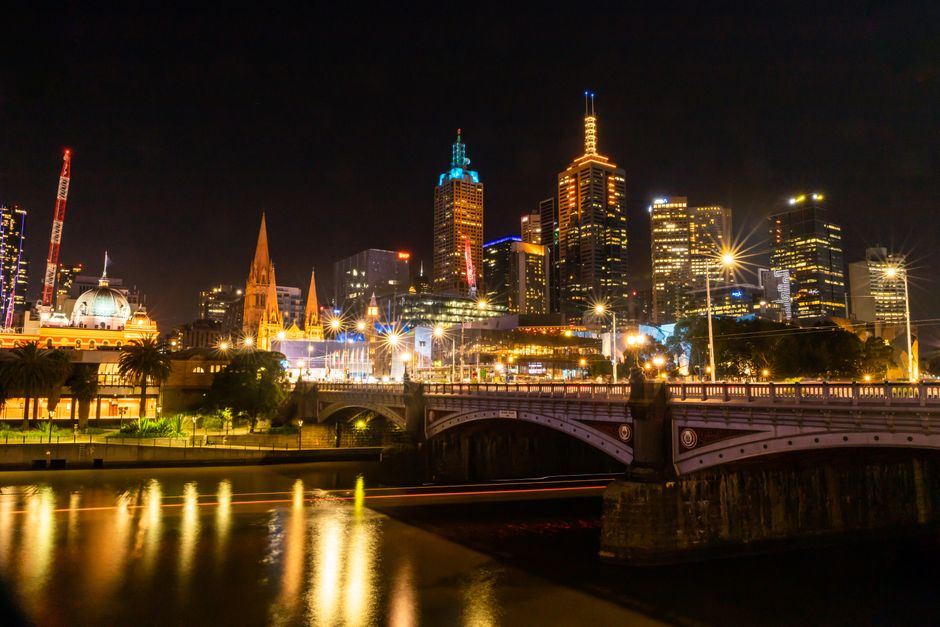
Victoria's publicly funded cultural institutions kicked off a coordinated duplicate-image replacement drive this week, targeting tens of thousands of redundant files clogging digital archives and slowing public access to collections. The effort, centred on institutions along Swanston Street and across Southbank, follows a broader audit that exposed significant inefficiencies in how digital assets are catalogued, stored and served to the public.
The timing matters. Over the past 18 months, Victorian institutions have poured resources into digitising physical collections — a process accelerated after pandemic-era closures highlighted how dependent audiences had become on online access. That rush created a secondary problem: duplicate scans of the same object uploaded under different file names, inconsistent metadata, and broken links where replacement images had never been properly mapped to original catalogue entries. Staff at multiple institutions have described the backlog as substantial, though precise figures vary by collection size.
The State Library Victoria on La Trobe Street confirmed this week it is mid-way through a project to audit its Pictures Collection, one of the largest photographic holdings in the Southern Hemisphere with more than 800,000 items accessible via its online catalogue. The library's digital infrastructure team is running automated matching software to flag suspected duplicates before human curators make final replacement decisions. The goal is to ensure that when a researcher or member of the public clicks through to an image, they reach the highest-resolution, correctly attributed version — not a compressed copy uploaded in 2021 during a hurried digitisation sprint.
Museums Victoria, which manages collections across the Melbourne Museum in Carlton Gardens and the Immigration Museum on Flinders Street, is separately upgrading its Collections Online platform. The organisation has flagged that duplicate entries — where the same artefact photograph appears under two or more accession numbers — can distort search results and skew the public record of what the institution actually holds. A review of the platform, which houses records for more than 17 million objects, is expected to wrap up by September 2026.
The National Gallery of Victoria on St Kilda Road is also involved, focusing specifically on its digital rights clearance workflow. Duplicate images in that context carry an added legal risk: if two versions of the same artwork photograph carry different licensing tags, the wrong one could be published commercially or in educational materials without the correct permissions attached.
Storage is not cheap. Cloud hosting costs for cultural institutions have risen sharply over the past two years, and duplicate files compound the bill without adding public value. Industry estimates suggest that poorly managed digital collections can carry duplicate rates of between 15 and 30 per cent of total file counts, though individual institutions have not publicly confirmed where their own numbers land.
There is also a user-experience dimension. Researchers working remotely — a group that has grown considerably since 2020 — have complained through official feedback channels about landing on low-resolution placeholder images or broken catalogue links, particularly when accessing Victorian heritage photography collections. The Digitising the News project, a collaboration between the State Library and several regional Victorian libraries, flagged duplicate-image errors as one of its top three catalogue quality issues in its most recent internal review.
For smaller community archives — including the Koorie Heritage Trust on King Street and various migrant community history groups in the northern suburbs — the problem is different in scale but equally real. Many rely on volunteer cataloguers and free-tier software that lacks automated deduplication. This week's broader institutional push has renewed calls for a shared, subsidised digital asset management tool that smaller organisations could access under a Victorian Government procurement arrangement.
Anyone managing a digital image archive — institutional or community — should use this moment to run a basic hash-match audit on their file libraries before the end of the current financial year. Free tools such as dupeGuru can identify identical files regardless of filename, and several Melbourne-based digital preservation consultants are offering short-engagement assessments through July. The State Library's digital preservation team has also published updated guidance on its website for affiliated collecting organisations.
Partner Content
SponsoredPartner Content lets Melbourne businesses reach engaged local readers with a clearly labelled, editorial-style feature. Every placement is marked Sponsored, in line with our sponsored content policy.
About this article
Published by The Daily Melbourne
Daily brief
Free, in your inbox before 7am. Weekdays.
You might also like
News
News
News
News
Free daily briefing
The Daily Network