Melbourne Archivists and Designers Tackle Duplicate Image Crisis This Week
A push to clean up digital asset libraries riddled with repeated and mismatched images is gaining momentum across Melbourne's cultural and government sectors.
4 min read
A push to clean up digital asset libraries riddled with repeated and mismatched images is gaining momentum across Melbourne's cultural and government sectors.
4 min read
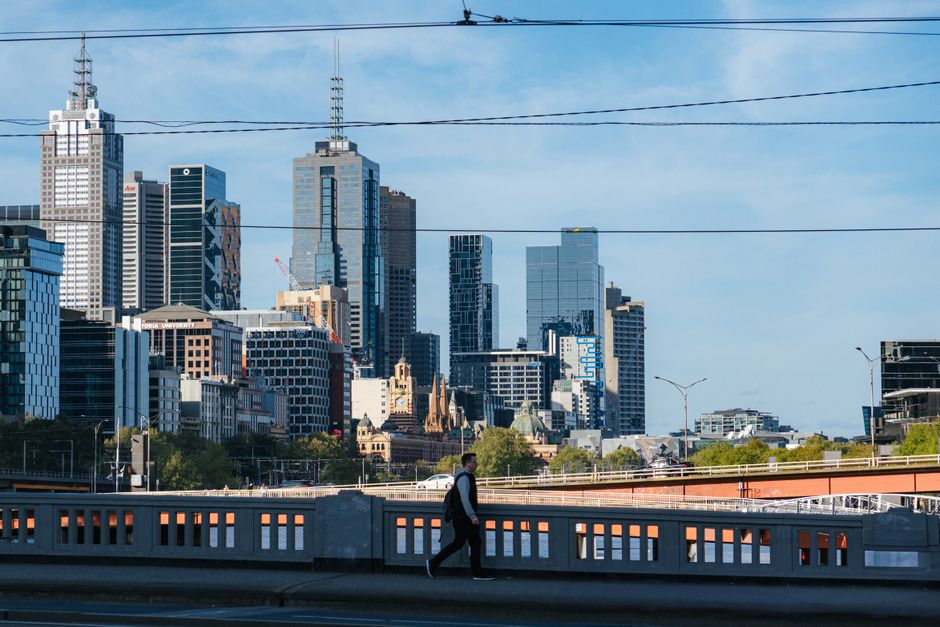
Melbourne's cultural institutions and government agencies spent much of this week auditing and replacing duplicate images embedded in their digital collections, a task that sounds mundane until you learn how badly it has undermined public-facing databases and internal workflows. The State Library of Victoria, which holds more than two million digitised items, confirmed this week that a phased duplicate-image replacement program begun in March 2026 had already corrected more than 14,000 catalogue records where identical or near-identical image files had been tagged to separate, distinct holdings.
The issue matters now because Victoria's broader digitisation push — part of the state government's Creative State 2025–2028 strategy — has accelerated the ingestion of material at a pace that quality-control teams have struggled to match. When an archivist at a Swanston Street reading room pulls up a digital record and the image attached to it belongs to an entirely different document, the credibility of the whole collection takes a hit. Researchers, journalists, and the general public rely on these systems.
The problem is not unique to the State Library. Docklands-based creative agency Bolte Studio, which manages digital asset libraries for several local government clients including the City of Yarra and the City of Port Phillip, told its clients in a June 30 advisory that duplicate image proliferation had inflated some asset libraries by as much as 30 per cent, slowing retrieval times and creating version-control headaches for design teams.
At the University of Melbourne's Digital Studio on Parkville campus, postgraduate researchers this week presented findings from a six-month audit of image metadata across three Victorian government open-data portals. Their preliminary report, circulated internally on July 2, identified duplicate image pairs numbering in the thousands across the Victorian Heritage Database and two planning-related spatial datasets. The core technical cause: automated ingestion pipelines that lacked hash-comparison checks, meaning the same image file uploaded under slightly different filenames was treated as a new, distinct asset each time.
The practical fallout is financial as well as reputational. Cloud storage costs for institutions running unmanaged duplicate assets compound over time. Industry benchmarks cited in a 2025 report by the Digital Preservation Coalition put the average cost of storing one terabyte of unmanaged archival data at around $180 per year in Australian cloud environments — a figure that scales quickly when libraries balloon with unnecessary copies. A mid-sized council with a 10-terabyte asset library inflated by 30 per cent duplication is, by that measure, spending roughly $540 a year on images it already has.
The State Library's program manager for digital collections is expected to present a progress update to the library's board at its August 2026 meeting, with a target of completing the first phase of replacements — covering pre-1950 photographic holdings — by October 31. That deadline is tight. The library's digitisation team on La Trobe Street is working with perceptual hashing tools, a technology that detects visually similar images even when file names and metadata differ, to automate the most repetitive comparison work.
For independent designers and small agencies across Fitzroy, Collingwood, and the CBD, the more immediate takeaway is practical. Digital asset management platforms that support perceptual hashing — Adobe Experience Manager, Bynder, and open-source alternatives such as ResourceSpace — now offer features that flag duplicates before they are formally ingested. Bolte Studio's June advisory recommended clients run a deduplication pass quarterly rather than waiting for annual audits.
The City of Melbourne's own Creative Programs team, based in the Town Hall precinct on Swanston Street, is reportedly reviewing its internal image library policies ahead of a broader content refresh planned for the second half of 2026. No timeline has been made public yet. What is clear is that after years of digitise-first, organise-later thinking, Melbourne's archival and creative sector is spending the middle of winter cleaning up the mess — one duplicate at a time.
Partner Content
SponsoredPartner Content lets Melbourne businesses reach engaged local readers with a clearly labelled, editorial-style feature. Every placement is marked Sponsored, in line with our sponsored content policy.
About this article
Published by The Daily Melbourne
Daily brief
Free, in your inbox before 7am. Weekdays.
You might also like
News
News
News
News
Free daily briefing
The Daily Network