Best of Melbourne
First Time in Melbourne: A Visitor Guide
Melbourne rewards visitors who understand its shape. Once you grasp the grid, the river and the ring of inner suburbs around them, the city stops feeling like a maze and starts feeling like a series of easy, walkable neighbourhoods. This guide gives you that orientation, plus the highlights worth your time and a realistic sense of how long to stay. For official tourism listings, events and current opening hours, the Visit Melbourne site is the place to confirm details before you go.
Get your bearings: the grid, the river and the rings
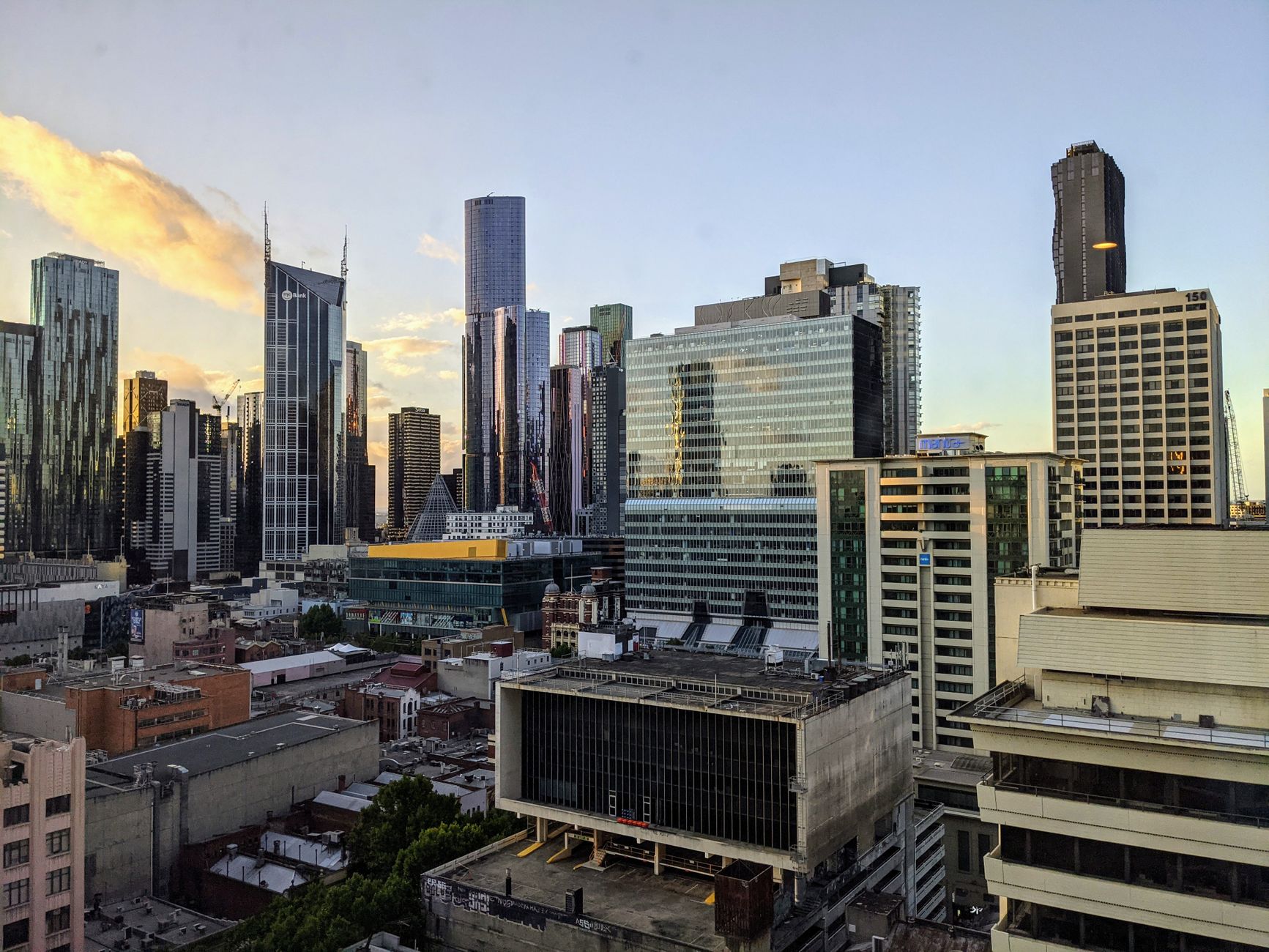
The heart of Melbourne is the central business district, laid out on the Hoddle Grid. This is the neat rectangle of streets bounded by Flinders Street, Spring Street, La Trobe Street and Spencer Street, laid out from 1837 by the surveyor Robert Hoddle. It sits at a slight angle to the suburban streets around it, which makes it instantly recognisable on a map. The grid's wide main streets (Collins, Bourke and Swanston among them) are crossed by narrow "little" streets that were once service lanes and have since become the laneways Melbourne is famous for.
The Yarra River, known by the Wurundjeri name Birrarung, runs along the southern edge of the grid and separates the CBD from Southbank. Flinders Street Station and Federation Square sit on the north bank; the Southbank Promenade and the arts precinct sit on the south. Get the grid and the river straight in your head and you have your two main reference points.
Beyond the centre, Melbourne fans out in rings. The inner suburbs (roughly within 5 to 10 km of the CBD) are where most first-time visitors spend their non-city time: Carlton, Fitzroy, Collingwood, Richmond, South Yarra, St Kilda and Williamstown. Each has its own character and most are a short tram or train ride from the centre.
Getting around: trams and the free tram zone
Melbourne's tram network is one of the easiest ways to move around, and the central city has a Free Tram Zone. Travel on trams entirely within the zone is free and you do not touch on with a Myki card. The zone covers the Hoddle Grid plus Docklands, taking in landmarks like Flinders Street Station, Federation Square, Queen Victoria Market and Spring Street. If your trip starts or ends outside the zone you must touch on with a Myki, and you should not touch on for a trip wholly inside the zone or you may be charged a fare.
The free City Circle tram (route 35) is a heritage service that loops the edge of the CBD and is handy for a first orientation lap. For the authoritative zone boundary, stop maps, timetables and current Myki fares (which change, so check rather than assume), see Public Transport Victoria. Visit Melbourne also has a plain-language getting around page.
The highlights worth your time
- Federation Square, opposite Flinders Street Station, home to NGV Australia (The Ian Potter Centre) and ACMI, the museum of screen culture.
- Free galleries. The permanent collections at the National Gallery of Victoria (both NGV International on St Kilda Road and NGV Australia at Fed Square) are free to enter, as is the State Library Victoria on Swanston Street, with its domed La Trobe Reading Room. Blockbuster exhibitions are usually ticketed, so check the institution's site.
- Laneways and arcades. Hosier Lane for street art, the heritage Royal Arcade and Block Arcade for ornate Victorian shopping, and countless lanes packed with cafes and bars.
- Queen Victoria Market, the largest open-air market in the Southern Hemisphere, trading on selected days (closed Mondays and Wednesdays, so check the official site).
- The Royal Botanic Gardens beside the river, with the popular Tan walking and running loop around the perimeter.
- The MCG in Yarra Park, with guided tours and the Australian Sports Museum on non-event days.
- St Kilda for a bayside beach, the pier and the little penguin colony at the breakwater (best around dusk; flash photography is prohibited at the viewing area, run by Parks Victoria).
Where to eat: follow the migrant strips
Melbourne's food culture grew out of post-war migration, and the best eating is still organised by neighbourhood. Lygon Street in Carlton is the city's "Little Italy" and is often credited as a cradle of its cafe and espresso culture. Chinatown, on Little Bourke Street, dates to the 1850s gold rush. Victoria Street in Richmond is "Little Saigon" for pho and banh mi, Smith Street straddling Collingwood and Fitzroy is the inner-north bar and dining strip, Footscray in the west is richly multicultural, and Chapel Street in South Yarra leans upmarket. The flat white and Melbourne's espresso culture are local points of pride.
How long to stay, and a day trip or two
Give Melbourne at least three full days: one for the CBD grid, river and galleries; one for an inner suburb or two plus the bay at St Kilda; and one for a day trip. The closest and easiest day trips are the Yarra Valley wine region and the Dandenong Ranges (each about an hour by car). The Mornington Peninsula and Phillip Island, with its sunset penguin parade, are around 1.5 to 2 hours away. The Great Ocean Road and Twelve Apostles are the most spectacular but also the longest, often done as an overnight rather than a single day. Public transport to the peninsula and Phillip Island is limited, so a car or organised tour usually makes sense.
One last thing: the weather
Melbourne is famous for "four seasons in one day". Cold fronts sweep in off the Southern Ocean and conditions can swing between sun, wind and showers within an hour, so carry a layer and something for rain whatever the forecast says. Check the Bureau of Meteorology in the morning and plan flexibly.
This is general information produced with AI. Please confirm current fares, opening hours, dates and other details with the linked official sources before you travel.

-
1
Federation Square
The starting point for most first-time visits: a public square with the Ian Potter Centre gallery, ACMI, cafes and Melbourne's main visitor information centre.
-
2
Melbourne Laneways
The city's famous cafe culture lives in its narrow laneways, Degraves Street, Centre Place and Flinders Lane are the best to start.
-
3
Royal Botanic Gardens
Thirty-eight hectares of gardens on the Yarra, free to enter and one of the world's great urban green spaces.
-
4
St Kilda Beach and the Esplanade
The bayside suburb of St Kilda gives the city its beach, swim in Port Phillip Bay, walk the pier and visit the weekend Esplanade artisan market.
-
5
MCG Tour
A behind-the-scenes stadium tour of Australia's most iconic sporting venue, including the players' rooms, Long Room and the National Sports Museum.
-
6
Queen Victoria Market
A working market since 1878 and one of the best places in Melbourne to have breakfast, pick up local food and get a feel for the city's character.
More Best of Melbourne
-
 How to Spend a Weekend in Melbourne: A Loose Two-Day Plan
-
 Melbourne Seasons and Four Seasons in a Day, Explained: The Best Time to Visit Melbourne
-
 Getting Around Melbourne: Trams, Trains and Myki Made Simple
-
 Where to Stay in Melbourne: The Areas Explained
-
 Melbourne Beaches and Port Phillip Bay: A Bayside Guide to St Kilda, Brighton and Williamstown
-
 Melbourne Laneways Guide: Hosier Lane, Degraves Street and the City's Hidden Arcades