Best of Melbourne
How to Spend a Weekend in Melbourne: A Loose Two-Day Plan
A weekend in Melbourne rewards people who do not over-plan it. The city is compact, walkable and stitched together by trams, so the trick is to pick a loose shape and let the laneways pull you sideways. Here is a two-day rhythm that locals would recognise: one day in the grid and its galleries, one day by the water or the gardens, with the city's food precincts threaded through both. No fixed timings, because half the pleasure is drifting.
Before you start: the grid, the trams and the weather
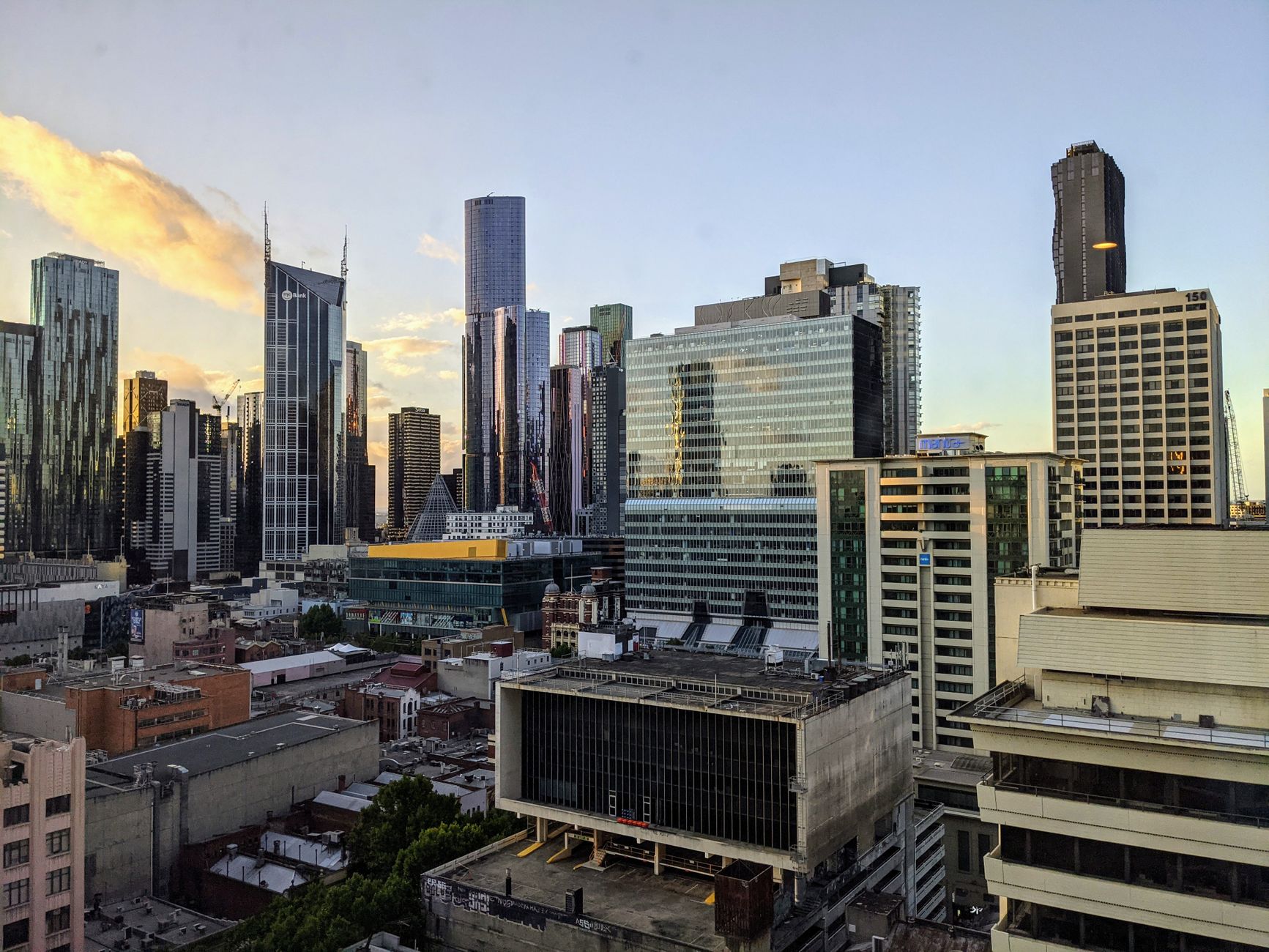
Central Melbourne sits on the Hoddle Grid, the rectangular street plan surveyor Robert Hoddle marked out in 1837, bounded broadly by Flinders, Spring, La Trobe and Spencer streets. The wide main streets have narrow "little" streets slotted between them, and those service lanes grew into the laneways the city is now known for. Because the grid sits at an angle to the suburbs, it is easy to keep your bearings on a map.
Inside the central city there is a Free Tram Zone covering the grid and Docklands, so trams are free as long as you stay within it and you do not touch on with a Myki. Travel beyond the boundary and a fare applies, so check the current zone map and fares before you ride: see PTV tickets and fares and the network maps at ptv.vic.gov.au. The free City Circle heritage tram (route 35) loops the edge of the CBD if you just want to sightsee.
Melbourne weather is famously changeable, the old "four seasons in one day" line, because the city sits between hot inland air and the cool Southern Ocean. Showers tend to blow through fast rather than settle in. Pack a layer and something for rain whatever the forecast, and check the Bureau of Meteorology forecast on the morning.
Day one: laneways, free galleries and the river
Start in the grid on foot. Hosier Lane, a bluestone laneway off Flinders Street opposite Federation Square, is the best-known street-art spot, with murals that change constantly. From there wander the heritage arcades: the Royal Arcade between Bourke Street Mall and Little Collins Street was built in 1869 to 1870 and is the oldest surviving arcade in Australia, complete with the Gog and Magog figures; the Block Arcade nearby is known for its mosaic floor and glass canopy. The City of Melbourne keeps a useful overview of laneways and arcades.
Melbourne is unusually generous with free culture. Several major institutions offer free general entry to their permanent collections, with separate tickets only for special exhibitions. Good anchors for the day:
- NGV Australia at Federation Square, the Ian Potter Centre, holds Australian and Indigenous art, while NGV International sits across the river on St Kilda Road. Check hours and exhibition tickets at ngv.vic.gov.au.
- ACMI at Federation Square, where the permanent screen-culture exhibition is free to visit (acmi.net.au).
- State Library Victoria on Swanston Street, free to enter, with its landmark domed La Trobe Reading Room (slv.vic.gov.au).
For air, walk down to the Yarra River, known by the Wurundjeri name Birrarung. The riverside park Birrarung Marr sits between Federation Square and Melbourne Park, and the Southbank promenade runs along the opposite bank past the arts precinct. It is an easy loop back into the grid for dinner.
Eating across the weekend: the food precincts
Melbourne's cafe culture was seeded by post-war Italian and Greek migration in the 1950s, and the precincts still map onto that history. Rather than chase single venues, pick a strip and graze:
- Lygon Street, Carlton, the "Little Italy" strip widely called the birthplace of the city's cafe culture, dense with Italian restaurants and gelaterias.
- Chinatown, centred on the eastern end of Little Bourke Street, dating to the 1850s gold rush and described as the oldest Chinatown in the Southern Hemisphere.
- Victoria Street, Richmond, Melbourne's "Little Saigon", a noted destination for pho and banh mi.
- Smith Street, straddling Collingwood and Fitzroy, for bars and inner-north dining; Chapel Street in South Yarra for an upmarket cafe and fashion strip.
- Footscray, a strongly multicultural centre with Vietnamese and East African food and busy markets.
The Queen Victoria Market, open since 1878 and the largest open-air market in the Southern Hemisphere, is part produce hall and part institution. It trades on selected days and is closed some weekdays, so confirm current trading days, hours and any night markets at qvm.com.au.
Day two: the bay or the gardens
Pick your mood. For green, the Royal Botanic Gardens beside the Yarra in South Yarra are ringed by the Tan, a gravel loop of roughly 3.8 km that is the city's most popular running track; details and guided walks are at rbg.vic.gov.au. The City of Melbourne also keeps a ring of older parks around the grid, including Fitzroy, Treasury and the World Heritage-listed Carlton Gardens.
For the bay, ride out to St Kilda, a wide sandy beach close to the city, where St Kilda Pier gives you skyline views and a colony of Little Penguins lives in the breakwater rocks, best seen at dusk from the managed viewing area via free timed sessions (rules, access and booking via Parks Victoria). Further round the bay, the brightly painted Brighton Bathing Boxes on Dendy Street Beach are a classic photo, and Williamstown offers foreshore views back to the city. The largely flat Bay Trail makes for an easy walk or ride.
If you would rather venture out, the Dandenong Ranges are about an hour east for fern-gully forest and the 1000 Steps, and the Great Ocean Road and Twelve Apostles lie further west (closer to a four-hour drive, so often an overnight). See visitmelbourne.com for day-trip ideas, and check fares and timetables at ptv.vic.gov.au if you are going by public transport.
General information produced with AI. Opening hours, fares, trading days and seasonal details change, so please confirm current details with the linked official sources before you go.

-
1
Day 1 Morning: Federation Square and Laneways
Start at Federation Square, walk the CBD laneways for coffee and breakfast, and make your way through Flinders Lane to the Yarra.
-
2
Day 1 Afternoon: South Yarra and Royal Botanic Gardens
Walk across the Yarra to the Royal Botanic Gardens, explore the formal beds and lakeside paths, then take a tram up to Chapel Street.
-
3
Day 1 Evening: Fitzroy Restaurants
Head to Fitzroy for dinner on Brunswick Street or Smith Street, with some of Melbourne's most rewarding casual restaurants.
-
4
Day 2 Morning: Queen Victoria Market
Rise early for the Queen Victoria Market, Saturday and Sunday mornings are the best for fresh produce and the full market atmosphere.
-
5
Day 2 Afternoon: St Kilda
Take the No. 96 tram to St Kilda for a walk along the Esplanade, a swim or wade in the bay and a stop at Acland Street for cake.
-
6
Day 2 Evening: Southbank and the Arts Centre
Return to the city for dinner along Southbank Promenade, then catch a performance at the Arts Centre Melbourne or walk the riverside to Crown.
More Best of Melbourne
-
 Getting Around Melbourne: Trams, Trains and Myki Made Simple
-
 First Time in Melbourne: A Visitor Guide
-
 Melbourne Seasons and Four Seasons in a Day, Explained: The Best Time to Visit Melbourne
-
 Where to Stay in Melbourne: The Areas Explained
-
 Melbourne Laneways Guide: Hosier Lane, Degraves Street and the City's Hidden Arcades
-
 Queen Victoria Market and Melbourne's Market Culture: A Guide