AI Boom and Investor Flight Are Quietly Rewriting Melbourne's Job Market
From Cremorne tech hubs to the CBD's hollowed-out property sector, the forces reshaping Victoria's capital are landing hardest on workers deciding what to do next.
4 min read
From Cremorne tech hubs to the CBD's hollowed-out property sector, the forces reshaping Victoria's capital are landing hardest on workers deciding what to do next.
4 min read
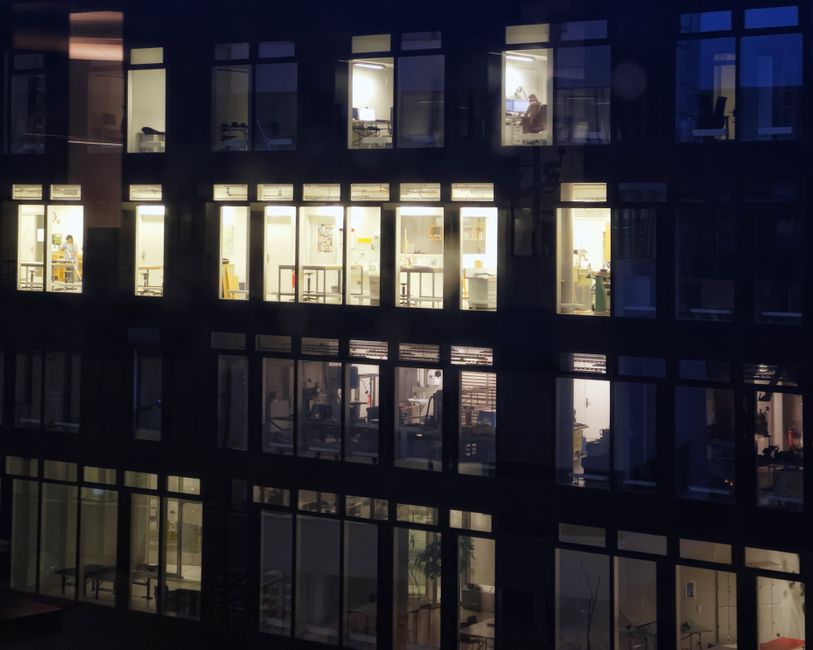
Melbourne's labour market is splitting in two. On one side, AI infrastructure investment is generating a surge of demand for data engineers, electrical contractors and project managers. On the other, the residential property sector — which employed tens of thousands of mortgage brokers, conveyancers, real estate agents and construction workers during the pandemic boom — is shedding jobs as investors drain from the market following the Victorian government's land tax changes.
Both shifts are happening at the same time, and the collision is forcing workers and employers across the city to recalibrate faster than most had anticipated heading into the second half of 2026.
The property retreat is stark. Auction clearance rates across Melbourne's inner and middle suburbs have fallen below 55 per cent for the fifth consecutive weekend, according to data from the Real Estate Institute of Victoria. That is down from roughly 72 per cent at this point last year. Several Collingwood and Fitzroy-based buyer's agencies that expanded aggressively through 2024 have quietly reduced staff by between 15 and 30 per cent since March. Job listings for property managers on platforms like Seek dropped 22 per cent quarter-on-quarter in the three months to June 30.
Against that backdrop, the AI datacentre pipeline is generating real employment noise. Equinix operates a campus in Port Melbourne and broke ground on a third building there in April, a project requiring roughly 400 construction trades over 18 months. AirTrunk's facility in Tullamarine is advertising for 60 permanent operational roles paying between $95,000 and $140,000, with applications open through August. Digital Realty has flagged a site near Laverton North as a future development, pending planning approval from Wyndham City Council.
These are not entry-level positions. The skills required — cooling system engineering, high-voltage electrical certification, network operations — are specialist, and Melbourne's training pipeline has not caught up. TAFE Victoria's Advanced Manufacturing and Engineering campus in Sunshine has enrolled 340 students in a new Certificate IV in Data Centre Operations that launched in February, but the first cohort won't graduate until mid-2027. Industry groups estimate the state faces a shortfall of at least 1,200 qualified datacentre technicians over the next three years if construction timelines hold.
At the same time, concerns are mounting that the land hunger driving datacentre development is crowding out industrial and logistics employment in Melbourne's west. The Truganina and Derrimut freight precincts, which between them support more than 28,000 direct jobs according to the Property Council of Australia's 2025 Victorian logistics report, are competing for the same zonable industrial land. Port Melbourne, Laverton and Sunshine West have each seen industrial land values increase by more than 40 per cent since 2023, pricing out smaller manufacturers and warehousing operators who have traditionally employed workers without tertiary qualifications.
The divergence has a practical implication for anyone in Melbourne weighing a career move or a hiring decision in the second half of this year. Workers coming out of the property sector who have project coordination experience are finding their skills translate reasonably well into construction-phase roles on infrastructure projects — several recruitment firms on Collins Street are already running targeted retraining programs in partnership with Infrastructure Victoria. But the window is not indefinite. Most major datacentre construction phases complete within 24 months, after which permanent headcount is a fraction of the build workforce.
For employers, the competition for technical talent is acute enough that salary benchmarks set even 12 months ago are outdated. Firms that budgeted for mid-range network engineers at $110,000 are finding the market has moved closer to $130,000 for candidates with live datacentre experience. The state government's Jobs Victoria program, which offers wage subsidies of up to $10,000 for eligible employers hiring retrenched workers, has seen application volumes rise 18 per cent since April — a signal that the churn is real and accelerating.
Melbourne's labour market has navigated structural shifts before. This one is moving quickly enough that the workers who come out ahead will be those who treat the next six months as a decision point, not a waiting period.
Partner Content
SponsoredPartner Content lets Melbourne businesses reach engaged local readers with a clearly labelled, editorial-style feature. Every placement is marked Sponsored, in line with our sponsored content policy.
About this article
Published by The Daily Melbourne
Daily brief
Free, in your inbox before 7am. Weekdays.
You might also like
Business

Business

Business

Business
Free daily briefing
The Daily Network