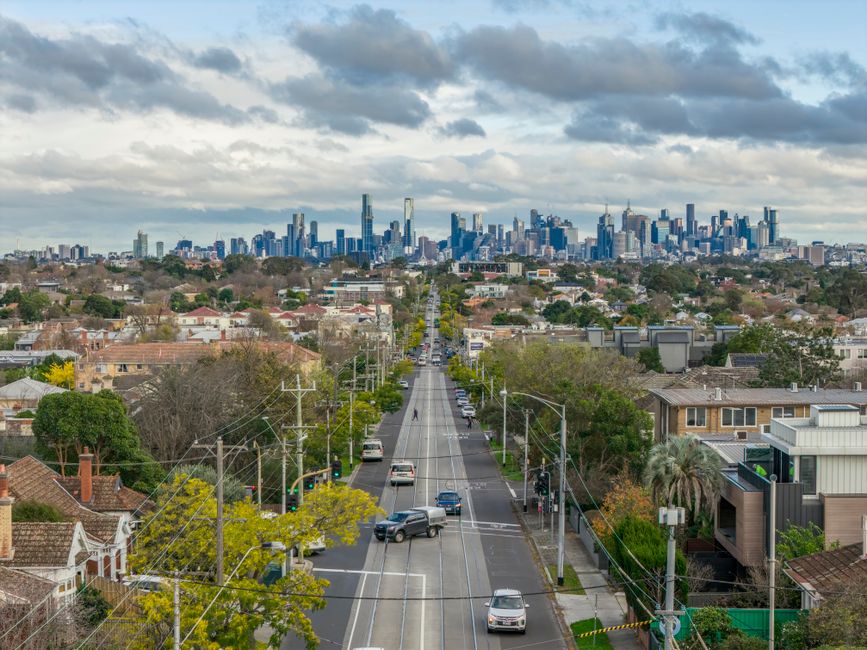
Melbourne's property market is experiencing a telling shift in investor behaviour, with the newly approved Metropolitan Rail Extension creating unexpected demand in suburban pockets previously dismissed as too remote for serious consideration.
The $4.8 billion project, which will extend rapid transit from Footscray through Yarraville and connect to the Docklands precinct by 2029, is already triggering a ripple effect across the western suburbs. Property agents report enquiry spikes of 35–40% in suburbs along the proposed corridor, with particular activity clustering around West Footscray and the Seddon-Maribyrnong interface.
"We're seeing first-home buyers and investor syndicates reconsidering suburbs they'd previously overlooked," explains one local real estate network coordinator. The current median for outer western suburbs hovers around $750,000—nearly $170,000 below the Victorian median of $920,000—but that gap is narrowing rapidly as transport connectivity becomes the new premium.
Developers are responding aggressively. Three major projects have been lodged with the City of Footscray and Maribyrnong councils in the past eight weeks, targeting mixed-use precincts near proposed station sites. A 245-apartment complex planned for Hopkins Street in West Footscray is explicitly marketed on its "three-minute walk to future rail," with pre-launch pricing already commanding a 12% uplift compared to equivalent stock two kilometres away.
The extension also signals broader strategic planning. The Footscray Arts Lane precinct and the industrial corridors around Williamstown Road are earmarked for residential intensification, with planning amendments now in exhibition phase. Council projections estimate the corridor could absorb an additional 8,000 residents by 2035.
Not everyone is celebrating. Community groups along the route have raised concerns about construction timelines and gentrification impacts on established renters. Meanwhile, property owners in established bayside suburbs—Brighton, Sandringham, and Black Rock—are watching with interest, though their median prices ($1.3–$1.5m) insulate them from direct competition.
Industry observers note the extension reflects a maturing shift in Melbourne's property psychology. Commute time and transport access are now competing with—or exceeding—proximity to the CBD as value drivers. For investors and families willing to embrace a 40-minute train journey, the mathematics are compelling: substantial space, affordable entry points, and infrastructure certainty.
Construction commences early 2027. The first phase reaches Footscray by 2029; full Docklands integration follows by 2031.
This article was compiled by AI from the sources linked above and screened before publishing. See our editorial standards.