House versus unit price gap widens: what the divergence means for Melbourne buyers
As standalone homes surge past $950,000, apartments stall near $620,000—a split that reveals which buyers are winning and losing in today's market.
2 min read
As standalone homes surge past $950,000, apartments stall near $620,000—a split that reveals which buyers are winning and losing in today's market.
2 min read
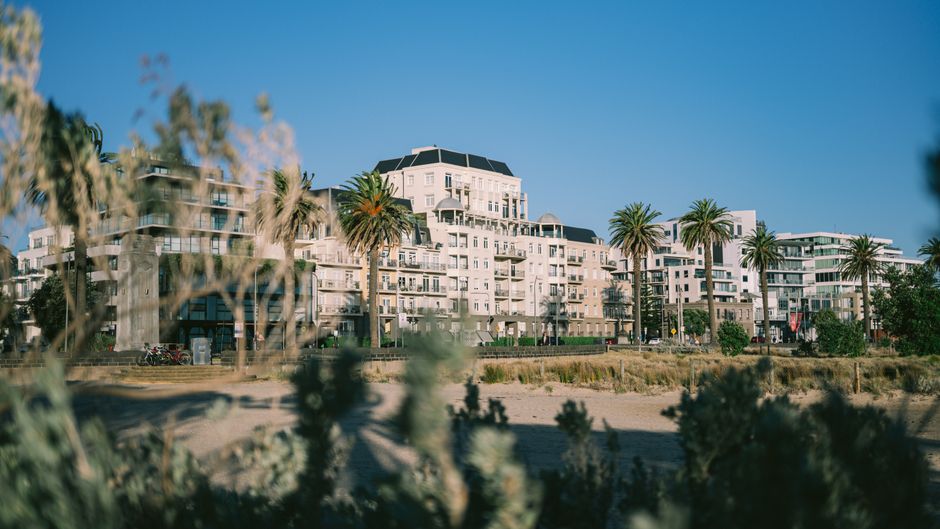
Melbourne's property market is splitting in two. While detached houses are climbing steadily toward the $950,000 mark, unit prices are treading water around $620,000—and that gap is reshaping who can afford what in Victoria's major cities.
The divergence is sharpest in Melbourne's bayside and inner-east corridors, where family homes in suburbs like Bentleigh East, Sandringham, and Brighton are commanding premiums that units cannot match. A three-bedroom house on a 600-square-metre block near Dendy Park in Brighton now regularly exceeds $1.2 million, while comparable two-bedroom apartments in the same postcode hover closer to $750,000. The spread is real, measurable, and telling a story about buyer priorities in a high-immigration environment.
Several factors are driving the wedge. First, migration demand is fuelling competition for family-sized homes with outdoor space. Working parents relocating from interstate or overseas want backyards for children and gardens—luxuries apartments cannot offer. Second, developers have flooded the unit market with new stock, particularly around transport corridors like Southbank and Box Hill, keeping apartment supply high and prices compressed. Third, interest rates and serviceability crackdowns have left first-home buyers—the traditional unit market—squeezed on borrowing capacity, while established buyers trading up to houses remain less price-sensitive.
The implications are significant. Investors who pivoted to units during the pandemic boom are now staring at slower growth. A $500,000 one-bedroom apartment near Caulfield that seemed like a sure play in 2021 has barely appreciated in five years. Meanwhile, a $900,000 house in the Frankston corridor—cheaper than that apartment—has gained $200,000 in the same period.
For first-home buyers, the message is uncomfortable: detached house markets are drifting further out of reach. Unless you have a $350,000+ deposit and joint income to match serviceability requirements, you're increasingly confined to units. Yet that unit market's slower growth means slower equity gains and potentially longer waits before trading up.
Heading into winter auction season, expect agents to lean hard on this story. Houses will command stronger buyer interest and tighter bidding. Units will require pricing discipline and targeted marketing to shift stock. For buyers, it's a reminder that location, type, and timing matter as much as price. The house-unit gap isn't closing anytime soon.
This article was compiled by AI from the sources linked above and screened before publishing. See our editorial standards.
About this article
Published by The Daily Melbourne
Daily brief
Free, in your inbox before 7am. Weekdays.
You might also like
Property

Property
Property
Property
Free daily briefing