Melbourne inner suburbs hit record prices as buyers flee outer sprawl
Inner Melbourne suburbs like Hawthorn and Camberwell break $1.3M as families reassess commute priorities. See which established areas now rival premium postcodes.
2 min read
Inner Melbourne suburbs like Hawthorn and Camberwell break $1.3M as families reassess commute priorities. See which established areas now rival premium postcodes.
2 min read
Listen to this article · 3:35
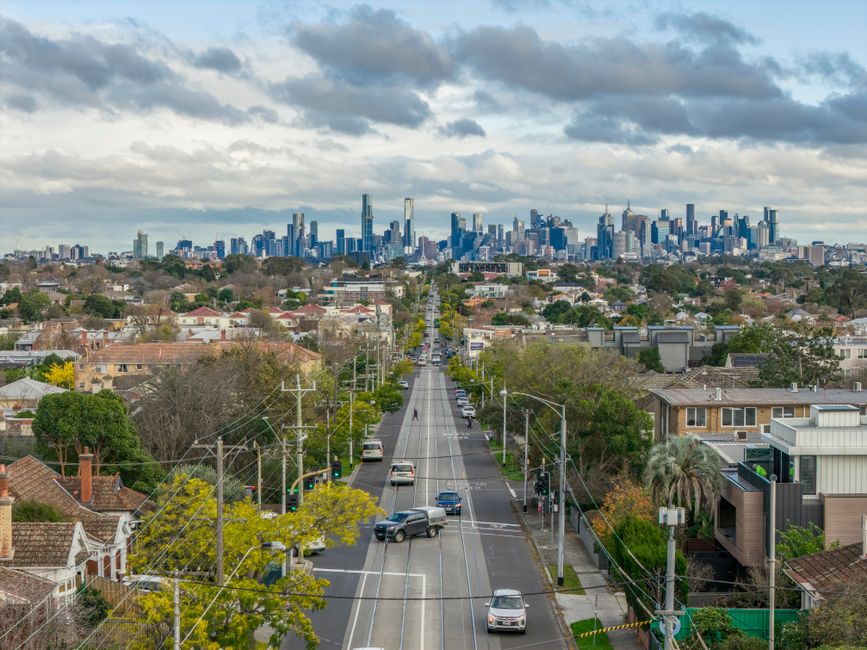
Melbourne's property market is experiencing a sharp geographic divide, with inner and middle-ring suburbs commanding record prices while outer areas struggle to attract buyers willing to commute longer distances.
Recent sales data reveals the story clearly. Suburbs within 15 kilometres of the CBD—including Hawthorn, Camberwell, and Balwyn—have seen median values climb past $1.3 million, with some individual homes breaking $2 million barriers previously reserved for bayside properties. Meanwhile, established middle-ring suburbs like Footscray and Yarraville are now competing directly with traditionally premium postcodes as buyers reassess their priorities.
"We're witnessing a fundamental shift in buyer behaviour," says Sarah Chen, a leading Melbourne property analyst. "Families are choosing shorter commutes and established infrastructure over the promise of more space in sprawling outer suburbs."
The Bayside corridor remains resilient, with Brighton and Beaumaris maintaining their prestige pricing around $1.7 million median. However, the real surprises are emerging in the Inner East, where suburbs like Bentleigh and Murrumbeena are experiencing unprecedented demand. Median prices in these areas have jumped eight per cent in the past quarter alone, outpacing broader market growth.
Frankston's traditional growth corridor shows mixed signals. While the broader region benefits from ongoing development and infrastructure investment, price appreciation has moderated compared to inner-ring suburbs. Properties along the Peninsula's most desirable streets command premium pricing, but the corridor's accessibility advantage—once a key drawcard—appears less influential than proximity to established cultural and retail precincts.
Unit markets tell an equally compelling story. With median apartment values hovering around $620,000 across Melbourne, inner-city apartments in Southbank and Docklands are now competing more aggressively with older apartment buildings in established suburbs. Young professionals increasingly question paying $750,000 for new-build apartments when comparable properties in Abbotsford or Collingwood offer heritage character and established communities at similar price points.
The migration surge continues fuelling demand across all segments, but supply constraints remain acute. Victoria's new home building pipeline—already struggling at decade-low levels—cannot keep pace with population growth, intensifying competition for existing properties.
Experts predict this trend will accelerate through 2025. Buyers seeking value are increasingly looking 12-15 kilometres out rather than 25 kilometres, fundamentally reshaping suburbs once considered secondary options. For investors, the message is clear: established inner and middle-ring suburbs offer more resilience than speculative outer-ring developments.
This article was compiled by AI from the sources linked above and screened before publishing. See our editorial standards.
About this article
Published by The Daily Melbourne
Daily brief
Free, in your inbox before 7am. Weekdays.
You might also like

Property

Property
Property
Property
Free daily briefing