news
Melbourne's $2.2 Billion Rail Loop Hits Delays, Frustrating Suburban Commuters
With stage one of the Suburban Rail Loop pushed back and costs ballooning, residents across Melbourne's middle-ring suburbs are asking whether the project will ever deliver what was sold to them.
How we reported this
The Allan government confirmed last month that the first stage of the Suburban Rail Loop, connecting Cheltenham to Box Hill via a new underground corridor, will not open before 2035 at the earliest, two years later than the timeline promoted during the 2022 state election campaign. The revised cost estimate sits at $34.5 billion for stage one alone, up from the original $30.9 billion projection released by Infrastructure Victoria in 2021.
The delay lands hard on communities that planned around the project. In Clayton, where the new station is set to sit beneath Carinish Road, residents and local business owners have spent three years watching construction compound fencing eat into carparking and foot traffic. The station precinct rezoning that was supposed to unlock apartment development near Monash University has stalled with it, leaving a patchwork of half-approved planning permits and frustrated developers sitting on land they cannot build to full density.
The Knock-On for Daily Commuters
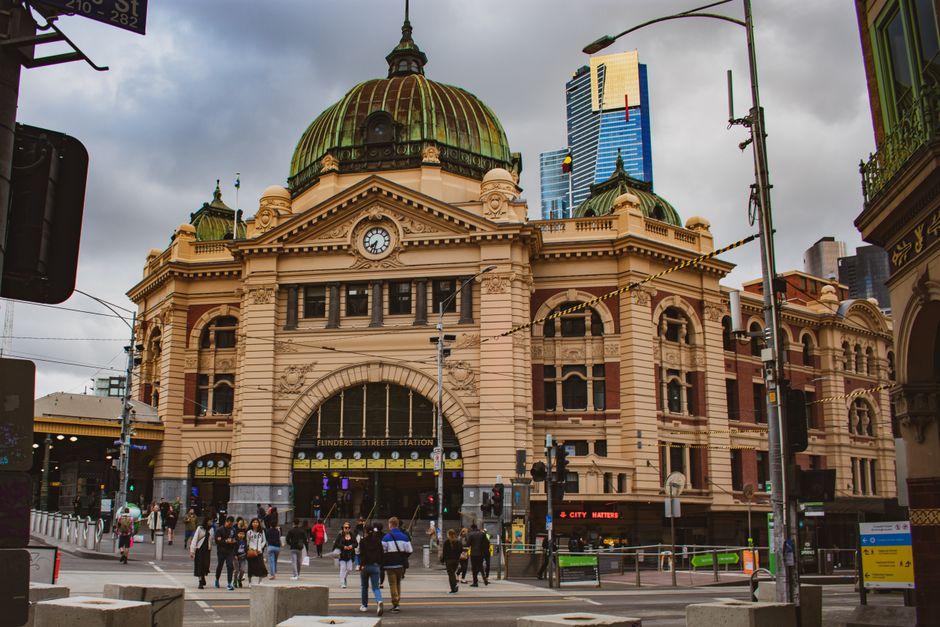
For the 78,000 people who currently ride the Glen Waverley and Frankston lines on a typical weekday, figures drawn from the Public Transport Victoria 2024-25 patronage report, the Loop was the answer to a specific and daily frustration: trains that funnel into the City Loop and slow to a crawl through Flinders Street Station. The new orbital line was designed to let passengers travel between suburban hubs without touching the CBD at all. A commute from Ringwood to Glen Waverley by public transport currently takes 72 minutes via the city. The Loop, once complete, was projected to cut that to around 28 minutes.
That relief is now more than a decade away. In the meantime, Metro Trains Melbourne is managing a network under sustained pressure. The Cranbourne-Pakenham corridor, which will eventually connect to the Loop at Clayton and Cheltenham, recorded 94.3 per cent on-time running in the March 2026 quarter, a headline figure that masks the reality for passengers: trains that arrive on time but packed well beyond comfortable capacity during the 7am to 9am window at stations like Caulfield and Richmond.
The CFMEU's continued industrial disputation on tunnelling subcontracts has not helped. Work stoppages on the tunnel boring section between Burwood and Box Hill added an estimated six weeks of delay during the first quarter of 2026, according to the Suburban Rail Loop Authority's quarterly project report tabled in May. The authority disputes that framing, arguing the revised timeline reflects geotechnical challenges under the Gardiners Creek corridor rather than industrial action alone.
What Residents Should Expect Through the Disruption
For people living within 800 metres of future Loop stations, Burwood, Glen Waverley, Monash, Clayton, Cheltenham and Box Hill are the stage one stops, the construction impact is not abstract. Noise management plans lodged with local councils in Whitehorse and Monash allow for extended works hours until 11pm on weekdays and 10pm on Saturdays, conditions that run through at least mid-2027. Residents can lodge complaints directly with the Suburban Rail Loop Authority's community liaison office, which operates a 1800 number and responds within 48 hours under the current community engagement charter.
The state government's position is that the project remains fully funded and fully committed, pointing to the $10 billion Commonwealth contribution secured under the 2022 National Cabinet agreement as structural proof the project cannot simply be shelved. Critics, including the Victorian opposition and the Grattan Institute, argue the funding model relies on land value capture mechanisms around station precincts that have not yet been legislated.
The next formal project update is due in October 2026, when the Suburban Rail Loop Authority is required to table its annual report to parliament. That report will include revised milestone dates, updated cost forecasts and the first independent audit of tunnelling progress since boring began under Dandenong Road in late 2024. For residents in Clayton, Burwood and Box Hill, that document will matter considerably more than the politicians' talking points that have surrounded this project since ground first broke.