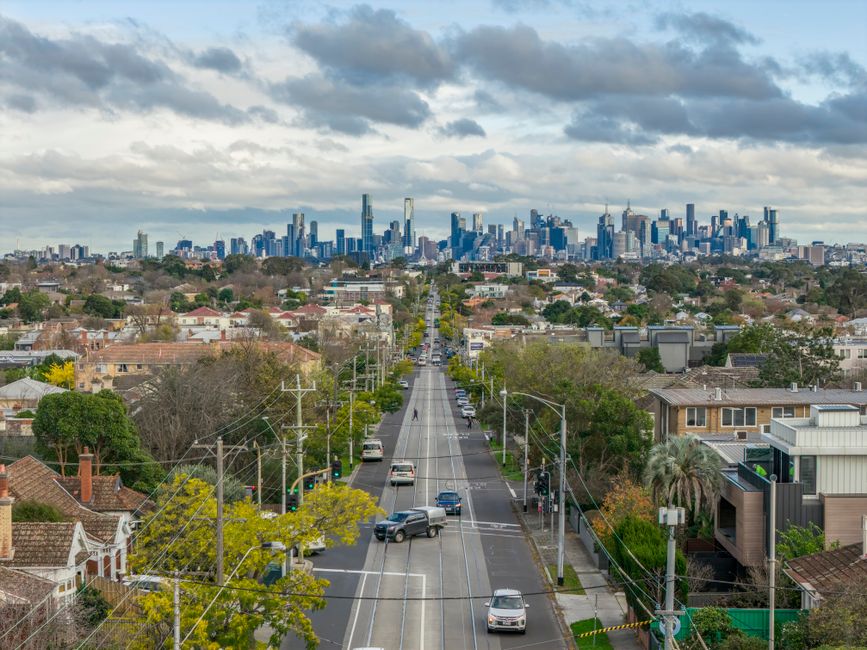
Residents across Melbourne's middle and outer suburbs are demanding faster action on urban heat and stormwater flooding, saying the Victorian government's green infrastructure programs are arriving too slowly and too inconsistently to match the climate pressure already landing on their streets. The frustration comes as Sydney's hottest June on record since 1859 has sharpened the conversation about what extreme heat actually feels like in urban neighbourhoods with little shade.
The timing matters. Victoria's Department of Energy, Environment and Climate Action is currently mid-implementation of its Urban Forest Strategy, a framework that committed $48.5 million over four years to expand tree canopy across metropolitan Melbourne. That funding round closes in September 2026, and community groups say they can already see a stark divide between inner suburbs with established programs and outer corridors that are still waiting.
Where the Money Has Landed — and Where It Hasn't
In Coburg, the Merri-bek City Council's street tree planting blitz along Sydney Road has added more than 600 new trees since late 2024, and long-term residents say the difference on a summer afternoon is measurable. The council runs a companion program called Greener Merri-bek, which offers residents a free tree for their naturestrip provided they commit to watering it through its first two summers. Demand outstripped supply within six weeks of the program launching in February 2025.
Cranbourne East tells a different story. Residents near Marriott Waters estate, a housing development on the City of Casey's southeastern fringe, describe streets with almost no mature canopy and retention basins that overflow during heavy rain events. The South East Melbourne Green Infrastructure Collective, a volunteer network formed in mid-2024, has been mapping heat exposure across Casey, Cardinia and Greater Dandenong and estimates that some streets in Cranbourne East record surface temperatures up to 14 degrees Celsius hotter than comparable streets in tree-lined inner suburbs like Carlton and Fitzroy on days above 38 degrees.
Casey Council received $2.1 million from the state's Urban Forest fund in the 2025-26 financial year, but the collective argues that with more than 9,000 new lots approved for development in the corridor since 2022, the canopy deficit is growing faster than planting can close it. New estates under the Growth Areas Infrastructure Contribution framework carry minimum landscaping requirements, but enforcing compliance on developers once construction is complete has been a persistent problem, according to the collective's June 2026 monitoring report.
Community Voices Cutting Through the Policy Language
At a public meeting at the Cranbourne Library on June 21, residents described flooding on Thompsons Road after the June 17 rain event, with water pooling against fences for more than 36 hours. Several attendees said they had reported the issue to Casey Council multiple times without a drainage inspection being scheduled. Others raised concerns about asthma and heat stress among elderly family members during the warm spell that gripped Melbourne's southeast in the final week of June.
In Carlton, the contrast registered differently. Members of the Carlton Residents Association say their Parkville-adjacent streets have benefitted from the City of Melbourne's Urban Nature Strategy, which set a formal target of 40 per cent canopy cover across the municipality by 2040. The strategy, adopted in 2021, has since guided millions in capital works including bioswales on Grattan Street and native plantings along Princes Park Drive. Residents there acknowledge they are in a comparatively privileged position within Melbourne's greening patchwork.
The Victorian government has flagged a review of the Urban Forest Strategy's funding model before the September deadline, with Environment Minister Ingrid Stitt indicating in May that a growth-corridor component may be introduced to direct future grants. What that looks like in practice remains unresolved. For residents in Cranbourne East and similar estates in Wyndham and Melton, the practical question is straightforward: council nomination forms for the next round of state greening grants open on July 14. Community groups are urging residents to contact their local councillors before that date to ensure outer-suburban projects are formally submitted before the window closes.