How Melbourne's Housing Crisis Got This Bad: A Decade of Delayed Decisions
From the Hoddle Grid to the suburban fringe, a series of planning failures and political trade-offs explains why Melburnians are paying record rents in 2026.
4 min read
From the Hoddle Grid to the suburban fringe, a series of planning failures and political trade-offs explains why Melburnians are paying record rents in 2026.
4 min read
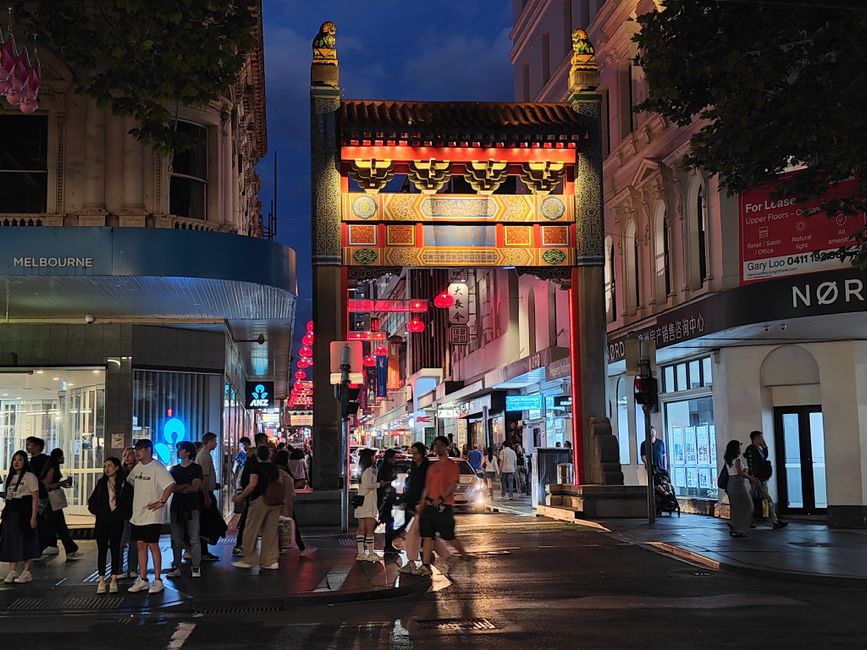
Melbourne's median house price cracked $1.1 million again in the June quarter, according to figures from the Real Estate Institute of Victoria released this week, and the typical weekly rent for a two-bedroom apartment in the inner suburbs has now reached $680. Those numbers did not appear from nowhere. They are the accumulated result of roughly fifteen years of planning decisions, political compromises and infrastructure neglect that successive state governments — Labor and Coalition alike — either chose or were forced to make.
The reason this history matters right now is that the Allan government's housing density reform package, tabled in the Victorian Parliament in May, is being sold as a clean break. It proposes higher-density zoning around 50 train stations within ten kilometres of the CBD, loosening rules that have locked Melbourne's middle ring in amber since the late 1990s. But the people who will live with the consequences — in Moonee Ponds, Brunswick East, Preston and Oakleigh — deserve to know what went wrong before, so they can judge whether this time is actually different.
Wind back to 2012. The Baillieu government's Melbourne Planning Scheme amendments introduced what planners called the Neighbourhood Residential Zone, a tool designed to protect established streetscapes from overdevelopment. The intent was not unreasonable. Residents in suburbs like Balwyn and Ivanhoe had genuine concerns about five-storey apartment blocks arriving next to federation-era bungalows. But the NRZ was applied so broadly — eventually covering more than a third of metropolitan Melbourne's residential land — that it effectively locked out medium-density housing across huge swaths of the city's middle ring.
At the same time, the state government's growth boundary, the Urban Growth Boundary established under the 2002 Melbourne 2030 strategy, kept pushing outward. Developers could still build, they just had to go further. Suburbs like Melton and Cranbourne North absorbed enormous population growth. Melton's local government area crossed 200,000 residents around 2023, with almost no rail connection beyond the Melton line's infrequent services. The infrastructure never kept pace. That is not an accident — it reflects a fundamental choice to prioritise stamp duty revenue from greenfield sales over the harder, more expensive work of retrofitting the established city.
The Napthine and then Andrews governments tinkered at the edges. The Better Apartments Design Standards of 2017 improved minimum sizes — new apartments had to be at least 37 square metres — but did little to change where apartments could be built. The Victorian Planning Authority released the Plan Melbourne 2017-2050 strategy, which identified twenty 'National Employment and Innovation Clusters' including Monash and Fishermans Bend, but most of those precincts remained works in progress years later. Fishermans Bend, the largest urban renewal project in Australian history by area at 485 hectares, still has fewer than 5,000 residents despite being rezoned in 2012.
The political economy of Melbourne planning is not complicated. State MPs in middle-ring seats, from Hawthorn to Bentleigh, consistently heard from organised, property-owning constituents who wanted the character of their suburb preserved. Renters and young prospective buyers, who would benefit most from more housing supply, are mobile and politically under-represented. The CFMEU, a persistent force in Victorian Labor politics, has historically favoured major construction projects — tunnels, stadiums, towers in the CBD — over the dispersed, often smaller-scale infill development that would actually house more people near existing jobs and schools.
The Suburban Rail Loop project, now under construction between Cheltenham and Box Hill at an estimated cost exceeding $35 billion, may eventually change the calculus by creating new high-density nodes. But those stations are years from opening, and the housing crisis is happening today, on Lygon Street and Sydney Road and High Street Northcote, where renters are competing for properties the moment they are listed.
The Allan government's station precinct reforms go to Parliament for a final vote later this year. Local councils, including Moreland — now officially Merri-bek — and Boroondara, have flagged significant objections. Planning Minister Sonya Kilkenny has indicated the state will override councils where necessary. Whether the legislation passes intact or is amended into something weaker will tell us a great deal about whether the political trade-offs that created this crisis have actually changed.
Partner Content
SponsoredPartner Content lets Melbourne businesses reach engaged local readers with a clearly labelled, editorial-style feature. Every placement is marked Sponsored, in line with our sponsored content policy.
About this article
Published by The Daily Melbourne
Daily brief
Free, in your inbox before 7am. Weekdays.
You might also like
News
News
News
News
Free daily briefing
The Daily Network