Melbourne needs roughly 800,000 new dwellings by 2051 to keep pace with population growth, according to the Victorian Government's own housing statement released in September 2023. It is not on track. The city's median house price sits above $900,000, rental vacancy rates in inner suburbs like Fitzroy and Brunswick hover below one per cent, and a sequence of planning decisions stretching back two decades explains, with uncomfortable clarity, how things got this bad.
The pressure is acutely visible right now because the Allan government's housing density reforms — changes that would allow medium-density development within 800 metres of train stations across metropolitan Melbourne — are grinding through a consultation process that community groups, councils and developers are all fighting to shape. The legislation's fate will determine whether the state can meaningfully bend the supply curve, or whether another reform cycle ends in diluted output.
The Long Road to a Supply Crisis
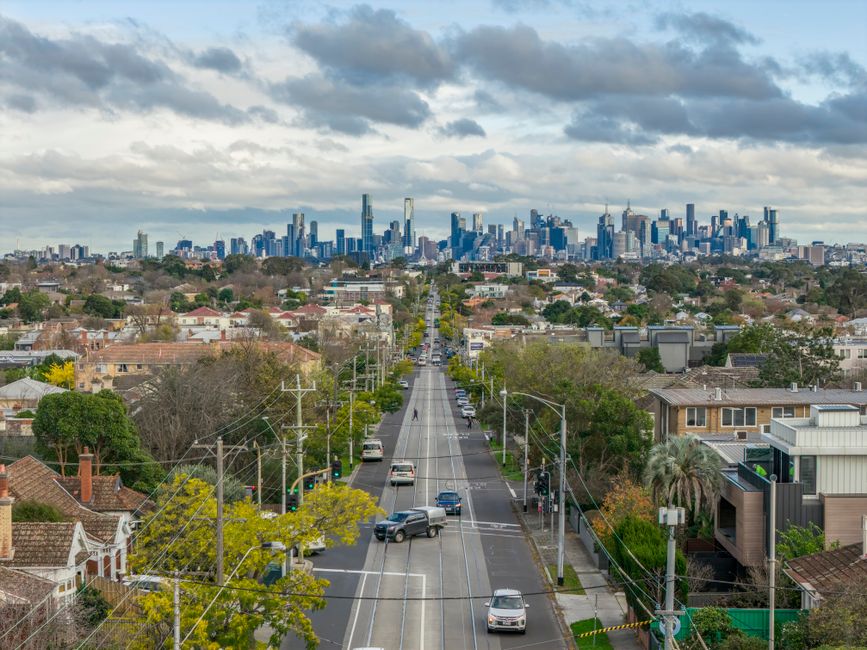
The foundation of the problem was poured in the early 2000s. Melbourne 2030, the Bracks government's landmark planning strategy released in October 2002, identified an urban growth boundary and designated activity centres as the magnets for density. The theory was sound. The execution collapsed. Councils including Boroondara and Stonnington used local heritage overlays and neighbourhood character provisions to resist medium-density development in established suburbs throughout the 2000s and into the 2010s, effectively pushing growth to the fringe.
Estates sprawled across Melton, Wyndham and Cranbourne. The developers built houses. The state government collected stamp duty. The infrastructure — trains, trams, schools, sewers — never kept up. By 2015, Melbourne's west had fast-growing suburbs with 90-minute commutes and GP shortages. The pattern was well documented by the Grattan Institute, which published repeated warnings through the 2010s that the planning system was systematically favouring existing homeowners over future residents.
The Andrews government attempted a correction. The Better Apartments Design Standards of 2017 were meant to lift the quality of medium-density infill. They raised costs. The stamp duty surcharge on foreign investors, introduced in 2016, dried up a funding stream that had underwritten high-rise apartment construction along Southbank and in Docklands. Cranes disappeared from several inner-city skylines within 18 months.
What the Numbers Actually Show
Victoria completed approximately 58,000 dwellings in the 2022-23 financial year, against a National Housing Accord target that requires the state to average closer to 80,000 annually through the decade. The shortfall is not marginal — it is structural. The CFMEU's ongoing industrial disputes on major construction sites, including projects in Footscray and along the Suburban Rail Loop corridor in Cheltenham, have added delays and costs that flow directly into feasibility calculations for new apartment towers.
Land in Melbourne's middle ring — the suburbs within 15 kilometres of the CBD that planning documents have theoretically encouraged for density since 2002 — now sells at prices that make five and six-storey residential development barely viable. A development site on Sydney Road in Coburg that sold for $3.2 million in early 2024 required a build cost of over $450,000 per apartment before land, finance and holding costs were factored in, according to industry body the Urban Development Institute of Australia Victoria. At current lending rates, that is not a project a private developer can fund without significant pre-sales that the market is not generating.
The state government's Housing Statement target of 2,400 new homes per year specifically through Activity Centre rezonings remains contested by at least a dozen councils that lodged formal objections in the first half of 2025. The Minister for Planning's office has indicated final decisions on the station precinct controls will land before Christmas 2026.
For Melburnians watching this unfold, the immediate practical reality is that rental prices in suburbs like Preston, Oakleigh and Sunshine are unlikely to ease until supply materially increases — and the reforms required to unlock that supply face another 18 months of political and legal attrition before a single extra apartment is approved under the new rules. Buyers and renters sitting on the sidelines should not expect the planning system to resolve their problem quickly. The decisions that created this shortage took 20 years to accumulate. Unwinding them will take longer than any single government's term.