Melbourne's Housing Gamble: How Does It Stack Up Against Amsterdam, Singapore and Toronto?
Victoria's density push is drawing comparisons to some of the world's most watched planning experiments — and the results are mixed.
4 min read
Victoria's density push is drawing comparisons to some of the world's most watched planning experiments — and the results are mixed.
4 min read
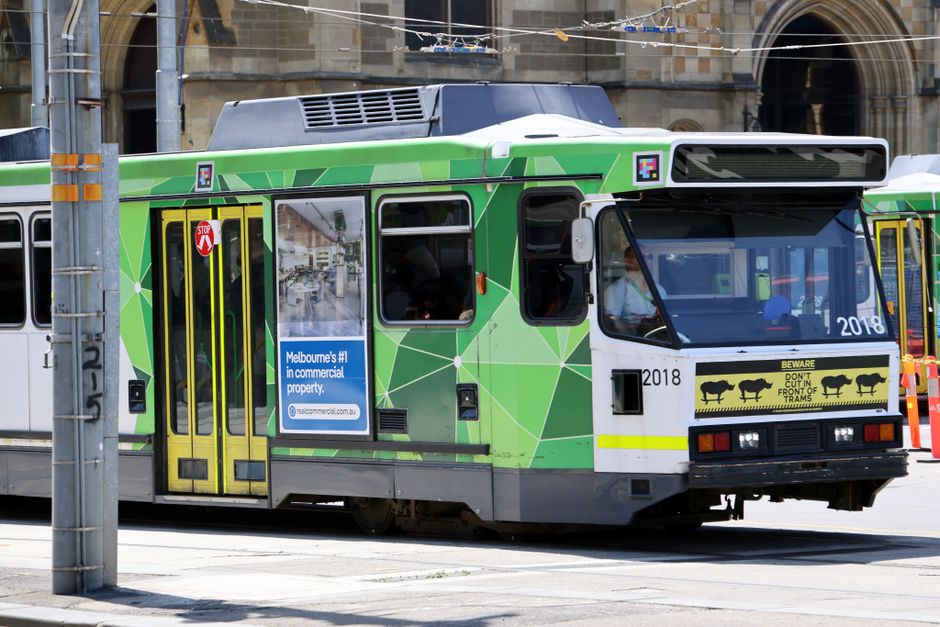
Melbourne's median house price sits at $915,000 as of the June quarter, and the state government's answer is a rezoning blitz that would allow six-storey apartment buildings within 800 metres of every train station in the metropolitan network. It is the most significant rewrite of Victoria's planning rules since the Kennett era. Whether it actually produces affordable homes is the question urban planners, renters and developers are now fighting over.
The timing is pointed. Sydney's property market is under renewed scrutiny after a string of record-breaking economic data, and federal housing pressure has intensified heading into the second half of 2026. For Melbourne, the stakes are specific: the city is expected to absorb an additional 1.2 million residents by 2051 according to the Department of Transport and Planning's own projections, and current construction rates are roughly 40 per cent short of what's needed to keep pace.
Singapore built its way out of a housing crisis by having the government own the land. Around 78 per cent of Singaporeans live in Housing Development Board flats, with the state retaining land value rather than gifting it to private developers. Melbourne's model is structurally the opposite: private development with planning incentives, which is much closer to what Toronto tried a decade ago. Toronto upzoned aggressively around transit corridors from 2015 onward and supply did increase — but so did land prices, as developers captured the uplift and passed costs downstream. Rents in Toronto rose 38 per cent between 2018 and 2024.
Amsterdam offers a third path. The Dutch city requires that 40 per cent of all new housing in major developments be classified as social housing, with another 40 per cent in the mid-market category. Only 20 per cent can be sold at full market rate. Melbourne's current inclusionary zoning requirements, by contrast, carry no mandatory affordable component at the state level — a gap that Housing Justice Australia, a Melbourne-based advocacy group, has been pressing the Allan government to close since early 2025.
The tension is most visible in Fitzroy North and Brunswick East, where residents' groups have lodged more than 300 objections to planning permit applications since the Activity Centre Program was announced in late 2024. The CFMEU's involvement in large construction sites along Sydney Road has added an industrial relations dimension to projects that were already contentious on heritage and amenity grounds.
At the same time, the Homes Victoria agency has committed $1.65 billion to redevelop public housing estates including the Flemington and North Melbourne towers — a project that, if delivered on schedule by 2031, would produce roughly 6,400 dwellings on land the state already owns. That is the closest Melbourne gets to a Singapore-style intervention, and even here private developers are joint venture partners, meaning land value capture is shared rather than retained.
The Urban Development Institute of Australia's Victorian chapter argues the state's approach is fundamentally sound but being strangled by slow permit approvals — the average commercial apartment development in Melbourne currently takes 26 months from lodgement to permit, compared with 11 months in Auckland after New Zealand's National Policy Statement on Urban Development mandated faster processing in 2021. Auckland's experiment is closely watched here: the city upzoned 75 per cent of its residential land in 2021 and saw a measurable increase in consented dwellings within 18 months, though affordability gains have been modest and uneven.
For Melbourne renters, the practical arithmetic is brutal. The median weekly rent for a two-bedroom apartment in Carlton is now $620, up from $490 in mid-2023. Construction costs inflated by supply chain pressures are not expected to ease substantially before late 2027 according to the Master Builders Association of Victoria.
The Allan government's next move is a mandatory inclusionary zoning consultation process due to report back to the Planning Minister by October. If that review recommends a binding affordable housing percentage — anything above 10 per cent would represent a significant shift in Victorian policy — it would move Melbourne closer to the Amsterdam model than any Australian city has yet managed. Until that report lands, developers will keep banking approvals, residents will keep objecting at VCAT on Lonsdale Street, and the city's housing gap will keep widening.
Partner Content
SponsoredPartner Content lets Melbourne businesses reach engaged local readers with a clearly labelled, editorial-style feature. Every placement is marked Sponsored, in line with our sponsored content policy.
About this article
Published by The Daily Melbourne
Daily brief
Free, in your inbox before 7am. Weekdays.
You might also like
News
News
News
News
Free daily briefing
The Daily Network