How Melbourne Became Australia's Most Diverse City: The Long Road to Now
From postwar refugee camps to today's 160-language suburbs, the forces that shaped Melbourne's multicultural identity didn't happen by accident.
4 min read
From postwar refugee camps to today's 160-language suburbs, the forces that shaped Melbourne's multicultural identity didn't happen by accident.
4 min read
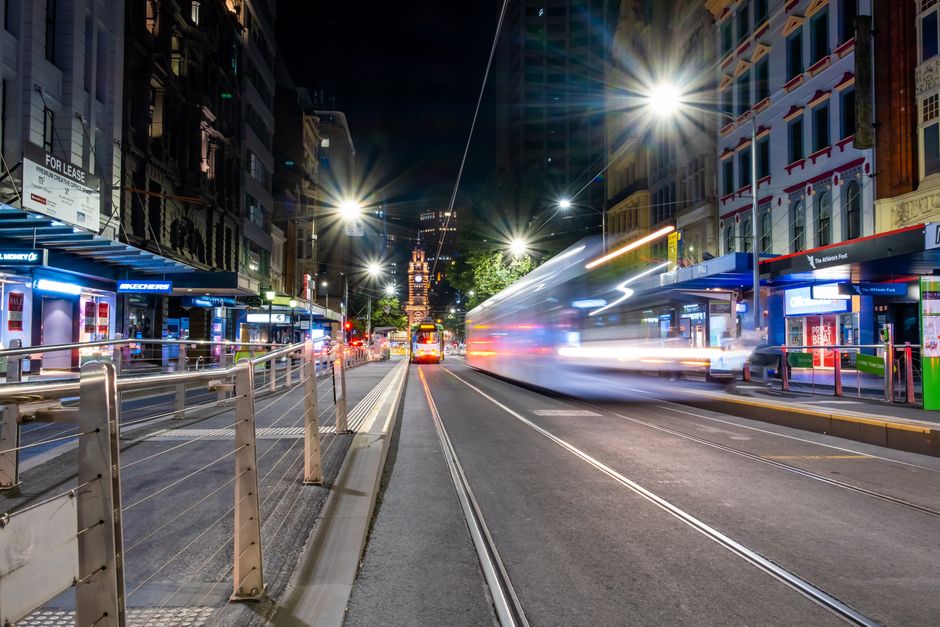
More than half of Melbourne's residents were either born overseas or have at least one parent who was. That figure — 56 per cent, recorded in the 2021 Census — didn't emerge from a single policy decision or a particular decade. It accumulated across eight decades of deliberate, contested and sometimes chaotic choices about who Australia would let in, and where they would land.
The number matters right now because the federal government is mid-revision of its Migration Strategy, first announced under Home Affairs Minister Clare O'Neil in late 2023 and still being refined through 2026. The Albanese government is trying to rebalance net overseas migration after pandemic-era surges pushed it above 500,000 in the 2022–23 financial year. Melbourne, which absorbs a disproportionate share of those arrivals — particularly international students and skilled visa holders — is at the centre of that reckoning.
The starting point is 1947. The Chifley government opened the Bonegilla Migrant Reception and Training Centre near Wodonga, three hours north of Melbourne, processing hundreds of thousands of European displaced persons over the following two decades. Italians settled Fitzroy and Carlton. Greeks clustered around Oakleigh and Coburg. The Galbally Report of 1978 formalised multiculturalism as federal policy, and the Fraser government — against the grain of its own base — accepted Vietnamese refugees after the fall of Saigon. Footscray absorbed a significant share of that wave, and its transformation from a white working-class industrial suburb into one of the most linguistically complex postcodes in the country dates precisely to that period.
Each subsequent decade added a layer. Cambodians arrived in the 1980s. Lebanese families spread across the western suburbs. The 1990s brought Somalis and Sudanese, many resettled through the Humanitarian Programme and supported by organisations including the Victorian Foundation for Survivors of Torture, based in Brunswick. The 2000s saw a surge from India and China, driven largely by the international student sector centred on the University of Melbourne in Parkville and RMIT's city campus on Swanston Street. By 2010, more than 200,000 Indian-born residents called Greater Melbourne home.
The current debate is no longer primarily about cultural acceptance. It's about housing. The Victorian government's housing density reforms — introduced through the Planning and Environment Amendment Act last year — are explicitly designed to concentrate new apartment supply around activity centres, many of which sit in the suburbs most transformed by migration: Springvale, Sunshine, Box Hill, Dandenong. The logic is straightforward: those suburbs already have the transport links, the commercial strips, the community infrastructure. The political tension is equally straightforward: established migrant communities in those areas are among the loudest voices opposing six-storey apartment blocks on residential streets.
Settlement services are also under strain. The Centre for Multicultural Youth, headquartered in West Melbourne, reported a 34 per cent increase in demand for its casework services between 2023 and 2025. The organisation works primarily with young people on humanitarian visas, a cohort that has grown as Australia lifted its annual Humanitarian Programme cap to 20,000 places for 2025–26, the highest in 30 years.
The student visa picture complicates things further. The federal government tightened English-language requirements for student visas in late 2024 and raised the financial threshold to $29,710 in savings — up from $21,041 — a move aimed at reducing the number of people using the student pathway as a de facto migration route. Universities Australia has warned the restrictions are cutting enrolments from South and Southeast Asia, sectors that Melbourne's universities depend on heavily for revenue.
For community organisations working in suburbs like Footscray and Noble Park, the immediate practical question is how services are funded through the transition. The Victorian Multicultural Commission administers a grants program — the Multicultural Affairs Grants Program — with a current annual pool of approximately $12 million, last reviewed in the 2025 state budget. Advocates say that figure hasn't kept pace with demand. The state budget update due later this year will be the first real test of whether the Allan government agrees.
Partner Content
SponsoredPartner Content lets Melbourne businesses reach engaged local readers with a clearly labelled, editorial-style feature. Every placement is marked Sponsored, in line with our sponsored content policy.
About this article
Published by The Daily Melbourne
Daily brief
Free, in your inbox before 7am. Weekdays.
You might also like
News
News
News
News
Free daily briefing
The Daily Network