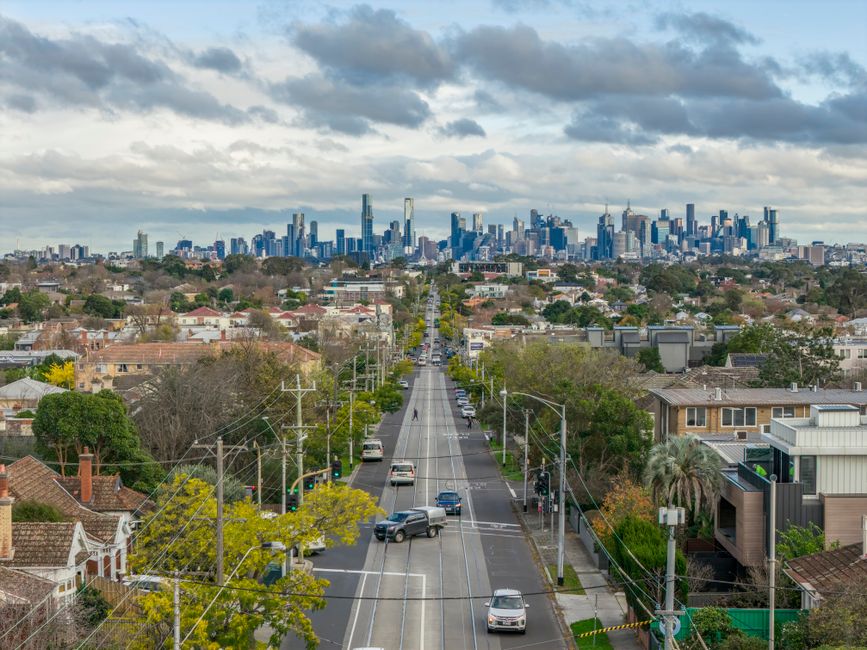
Victoria's housing density reforms are dividing planners, councillors and community groups like few policy fights in recent memory. The Allan government's push to rezone land within 800 metres of 50 designated train and tram stations — a policy inherited in part from the former Housing Statement released in September 2023 — has reached a flashpoint, with local governments, development advocates and tenant groups all staking out ground this week.
The urgency is real. Melbourne's rental vacancy rate sat at 1.1 per cent in May 2026, according to PropTrack data, while median weekly rents in inner suburbs like Fitzroy and Prahran have climbed past $650 for a one-bedroom apartment. For a city adding roughly 120,000 people a year, the supply pipeline is not keeping pace. Planning approvals for medium-density housing fell 14 per cent across metropolitan Melbourne in the 12 months to March 2026, industry figures show.
Planners and Councils at Odds Over Density Targets
The Victorian Planning Authority has been pushing hard for six-storey mixed-use zoning around stations including Footscray, Reservoir and Cheltenham. Officials inside the authority have pointed to modelling suggesting the rezoning could unlock more than 300,000 additional dwellings over 15 years. Critics — particularly from inner-north councils — argue the modelling overstates developer appetite and understates infrastructure costs.
The Urban Development Institute of Australia's Victorian chapter has been blunter. The institute's position, circulated to members last month, argues that unless the state government pairs rezoning with genuine infrastructure contributions reform, taller buildings will continue to face financing barriers regardless of what the planning scheme says. The institute points to the Arden urban renewal precinct in North Melbourne, where a decade of ambitious planning has produced a fraction of the promised housing stock, as exhibit A.
Community legal centres, particularly the Tenants Victoria organisation, have stepped into the debate from a different direction. Their concern is not supply in the abstract but who gets housed. Tenants Victoria has been warning state MPs that without mandatory inclusionary zoning — requiring developers to dedicate a share of new apartments to affordable or social housing — the density push will primarily benefit investors and owner-occupiers above median income. They have specifically flagged the Sunbury and Melton growth corridors, where land costs are lower but social housing stock is almost non-existent.
What Comes Next as Parliament Returns
The state government faces a parliamentary sitting fortnight starting July 21 when several planning-related bills are expected to come before the upper house. The Greens, who hold the balance of power in the Legislative Council, have flagged they will push amendments to embed a 15 per cent affordable housing requirement into any large rezoning package. Planning Minister Sonya Kilkenny has not publicly committed to that threshold, though officials from her department met with Greens housing spokesperson last week.
The CFMEU's construction division is watching closely too. The union has been vocal in recent months about the need for local industry standards and union-site agreements to accompany any fast-tracked development approvals — a position that puts it in alignment with some community groups on slowing the process, but for entirely different reasons.
For anyone trying to buy or rent in Melbourne's middle ring — suburbs like Preston, Sunshine or Bentleigh — the policy argument can feel abstract against the reality of a market where a modest three-bedroom house regularly trades above $900,000. Housing economists have consistently argued that supply alone will not fix affordability within a five-year horizon, but that blocking density near transit will make things measurably worse within a decade.
The next concrete test comes in late August, when the Victorian Planning Authority is due to release structure plans for the first tranche of station precincts. How those documents handle height limits, car parking minimums and affordable housing requirements will tell advocates and developers alike whether the government's reform instincts are genuine or largely rhetorical. Submissions will open for 60 days after release.