The Allan government confirmed this week that Victoria's committed infrastructure pipeline now exceeds $125 billion across rail, road and suburban rail loop works, making it the largest sustained public transport investment in the state's history. The number sounds abstract until you're the resident of Arden who can't sell your apartment because the construction compound next door has been there for three years, or the tradie on the West Gate Tunnel project earning double-time while the Maribyrnong River community downstream waits for a promised heritage restoration that keeps getting pushed back.
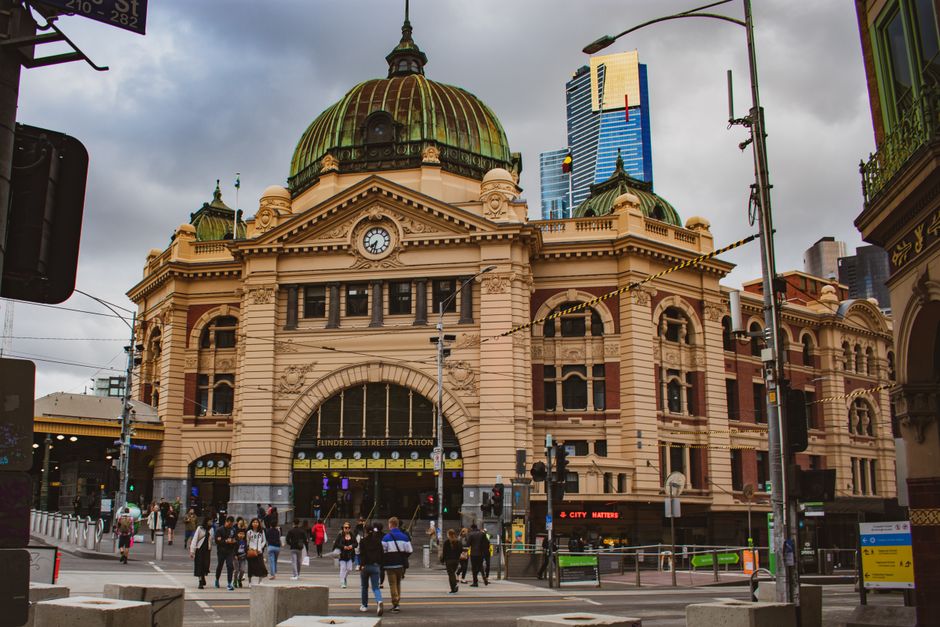
The timing matters. Melbourne is adding roughly 120,000 people a year, according to the Victorian Department of Transport and Planning's 2025 population projections. Public transit capacity, measured in passenger boardings at Flinders Street Station alone, sat at 74,000 per weekday in the June 2026 quarter—already back above pre-pandemic peaks. Without the Suburban Rail Loop and North East Link to absorb future demand, the maths on a city of five million simply don't work. That's the argument the government makes, and on the raw numbers, it's hard to dismiss.
But infrastructure at this scale doesn't happen in a vacuum. In Footscray, the Metro Tunnel's Anzac Station dig forced the relocation of 11 small businesses from Irving Street between 2023 and 2024, according to records held by Maribyrnong City Council. Some reopened. Others didn't. The West Footscray Community House, which ran a weekly migrant support program for recently arrived Afghan and South Sudanese families, spent six months operating out of a demountable after its building was requisitioned as a utility staging site. It reopened in February 2025, but attendance never fully recovered.
The Suburbs Carrying the Load
South-east Melbourne is next. The Suburban Rail Loop Authority is now in active planning mode for the Cheltenham-to-Box Hill eastern section, and property title searches along the Warrigal Road corridor show 34 compulsory acquisition notices issued since January. Residents in Heatherton and Clarinda received letters in March advising them to seek independent legal advice. The government's Land Acquisition Compensation scheme offers market value plus a 10 percent solatium payment, but residents' groups argue independent valuations consistently come in 12 to 18 percent above what the state's appointed assessors offer as a first figure.
The North East Link—the 6.5-kilometre tunnel connecting the Metropolitan Ring Road at Greensborough to the Eastern Freeway at Bulleen—is due to open in 2028. Banyule City Council estimates that once open, it will remove 15,000 trucks a week from residential streets including Rosanna Road and Greensborough Road, streets where some households currently clock wall vibrations from heavy vehicle traffic on weekday mornings. That's a genuine, measurable benefit. The question locals are asking is whether the benefit arrives before the 2028 state election or after it.
What Residents Should Know Now
For anyone living within two kilometres of a major project boundary, three things are worth doing immediately. First, register with the relevant project authority—the Suburban Rail Loop Authority, the North East Link Project office, or the West Gate Tunnel Project—to receive direct notification of works schedule changes. These agencies are required under the Major Transport Projects Facilitation Act 2009 to publish 48-hour noise variation notices, but they only go to registered addresses. Second, if you receive a compulsory acquisition notice, the Victorian Property Group at Victorian Legal Aid offers a free initial consultation specifically for homeowners in that situation. Third, check whether your postcode is within the Suburban Rail Loop's declared project area—updated maps posted on the authority's website in June show refinements that shifted some boundary lines by as much as 200 metres in the Clayton and Glen Waverley zones.
None of this is simple. A city that doesn't build eventually seizes up—anyone who tried to catch a Frankston line train at 8am in 2019 understands that. But the communities absorbing the disruption in Footscray, Cheltenham and Heatherton right now aren't abstractions in a government benefits analysis. They're the people paying upfront for gains the modelling says arrive in 2030 or 2035. That gap between sacrifice and payoff is where local politics actually lives.